 Business
"AI Is a Tool to Clear the Ground," Says Roberto Kim
The CEO of EDGE Productions discusses technology's role in supporting operations while safeguarding the creative process.
In a podcast interview, Roberto Kim discusses the practical use of artificial intelligence in creative production studios. He explains how technology streamlines administrative tasks without replacing the intuition of human talent.
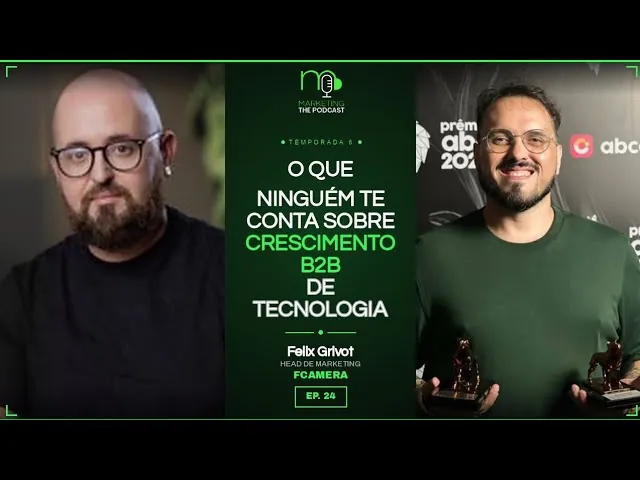
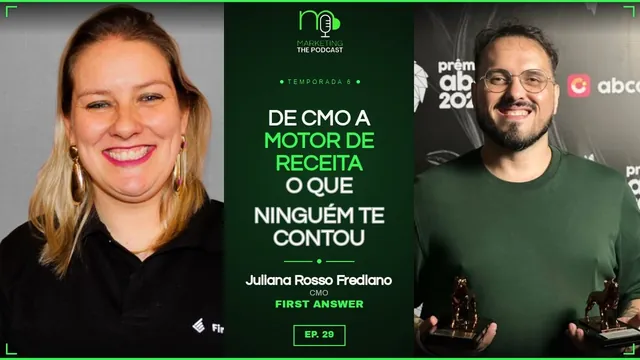
Roberto Kim, CEO of EDGE Productions, spoke with Bruno Gimenes on Marketing - The Podcast about how artificial intelligence and workflow automation fit into the routine of a creative production studio without diluting artistic work. The excerpt is part of a broader conversation covering the audiovisual industry.
In the video above, Kim breaks down how he structures company tools and challenges the popular assumption that technology needs to take over every single aspect of a business.
PUBLICIDADE (GAM) — 1250x250
A functional perspective on artificial intelligence
For Kim, discussions around technology frequently swing between total adoption and complete rejection, treating artificial intelligence like a binary switch rather than a practical support tool. He compares AI to everyday tools used for productivity and business management.
"AI is a tool just like any other. You use it accordingly," Kim states. "It's not an on-off switch where everything is either AI or not AI. It's not everything. What people confuse is wanting to inject AI into everything. AI has specific functions, and it's largely up to you to define them within your workflow."

Dividing administrative operations from creative work
At EDGE Productions, the practical rollout of technology centers on management and back-office workflows, cutting down mechanical friction to support the creative department. Kim explains that the financial, accounting, and administrative infrastructure was built around AI-driven processes, managed day-to-day by a single dedicated team member.
On the other hand, concept development and creative asset production remain entirely human-driven. Kim highlights the leadership of his partner, José, in creative direction, emphasizing that technology merely paves the way: "All these tools serve to prepare the ground so that when my gardener, who is José, goes in to do his job, it’s completely ready. So, AI isn’t actually here to change the world. It’s a tool like any other, like a CRM, like WhatsApp Business, like anything else."
The limits of replacement and the risk of over-automation
Addressing the push to replace human staff, Kim points out the collateral damage of hasty decisions across the digital industry. He points to Meta as an example, which experienced ad performance issues and support complaints after laying off 8,000 employees and handing customer service entirely over to automated systems.
"You can't take the human element out of the equation," Kim emphasizes, noting that his company continues to hire talent for its creative team. He also cautions against automations that introduce more red tape and slow down workflows instead of simplifying them: "Automation is only meant to prepare the ground. It's strictly about automating whatever makes things easier, because there are plenty of setups that I don't even consider true automation. People just overcomplicated the process to do the exact same thing."
PUBLICIDADE (GAM) — 1250x250