Education
Turma do Jiló: Carolina Videira and the Fight for True Inclusion
A mother transforms Brazilian education, driven by love and a vision for an inclusive future.
Carolina Videira, founder of Turma do Jiló, shares her inspiring journey. Driven by her son João, she created an NGO fighting for inclusive and accessible education across Brazil. Discover the challenges and solutions Turma do Jiló offers to transform schools and families.
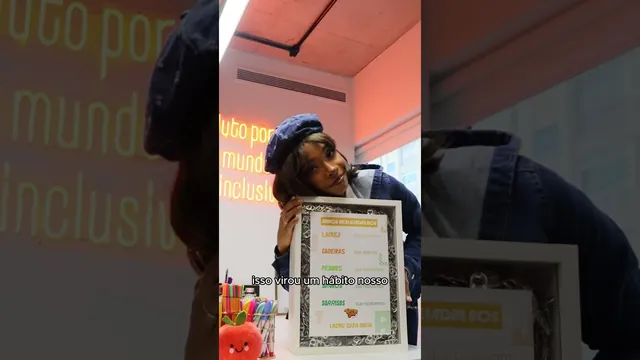
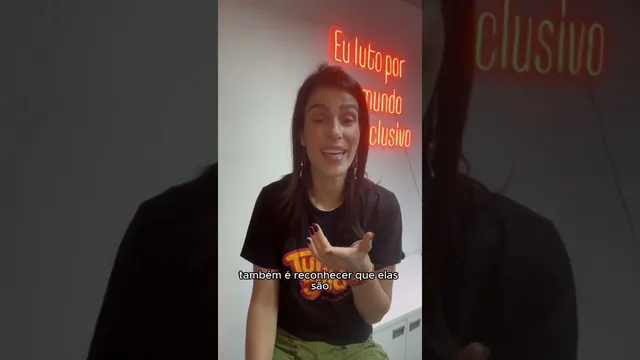
In this article, we delve into the inspiring journey of Carolina Videira, president and founder of Turma do Jiló, recognized by the "30 Mentes Diferentes" campaign from Rae,MP agency. Her story is a powerful testament to how a mother's passion and determination can transform the reality of inclusive education in Brazil. Follow the path that led to the creation of an ecosystem dedicated to diversity and building bridges for a more just society.
PUBLICIDADE (GAM) — 1250x250
The Wake-Up Call: João's Journey and School Prejudice
The motivation for Turma do Jiló stemmed from Carolina's personal experience with her first son, João. At three months old, it was noticed he didn't have standard development, and he was diagnosed with hypotonia. At age 2, when trying to enroll him in a regular school, Carolina directly confronted prejudice. João was "the pointed at one," "the child who doesn't walk," "the drooling boy," and wasn't invited to friends' homes. This reality pushed her to "make lemonade out of lemons": she invited João's friends to her home and proposed inclusive workshops at school.
Even faced with the mindset that João was only in school for a "social reason," Carolina questioned: "How do you know he doesn't learn? Who said he doesn't learn?" This search for answers led her to study assistive technology and other teaching methodologies worldwide. A milestone was the discovery of Tobii, an eye-tracking device that allows people with motor limitations to control a computer. With Tobii, João proved to everyone that he does learn and understands everything, demonstrating his potential and participation.
A Challenging Scenario: The Reality of Inclusion in Brazil
Carolina's journey revealed a larger problem: almost a quarter of the Brazilian population has some form of disability. However, these individuals are often invisibilized. The labor market inclusion law has quotas that are not filled, and for a long time, schools were not obliged to accept them. With the Brazilian Inclusion Law sanctioned in 2015, children with disabilities finally arrived in schools, but often "just for a visit," as institutions were unprepared.
The sad reality is that teachers, without proper training, would offer "blank sheets to draw on while the class was studying." The result is alarming: 70% of these individuals are not economically active, living on government aid. Enormous human potential is forgotten and neglected, depriving the country of valuable talents and contributions.
Turma do Jiló in Action: Transforming Schools and Lives
Turma do Jiló emerges as a comprehensive solution for this scenario, working for one school year in each institution. The program focuses on four main pillars:
Training and Support
The team provides complete training for teachers and staff, changing perspectives and demonstrating that everyone is capable of teaching. Simultaneously, there is support for families, often low-income, with assistance from social workers and psychologists. The NGO also offers legal advice so families understand their rights and duties under the Brazilian Inclusion Law.
Project-Based Learning and Accessibility
With students, Turma do Jiló implements a project-based pedagogy that addresses themes like diversity and differences, essential for building a culture of respect. Additionally, the team works on the physical accessibility of schools, which goes far beyond ramps. It includes tactile flooring, auditory signals, and other adaptations that meet all needs, preparing spaces for everyone to learn and, in the future, enter the job market.
The Big Dream: A Future Without Barriers
By 2018, Turma do Jiló was already serving 4,200 children and training over 300 teachers, becoming a benchmark in inclusive education. Carolina's dream is for the day to come when Turma do Jiló no longer needs to exist, not due to failure, but because inclusion will no longer be a topic for discussion, but rather an intrinsic reality in everyone's daily lives. Inclusion needs to be "in the DNA" of the new generation.
The biggest challenge is to scale the project, bringing it to as many schools as possible across Brazil. For this, partnerships are fundamental. "Together we are much stronger," says Carolina, expressing gratitude for opportunities like the "30 Mentes Diferentes" campaign, which amplifies Turma do Jiló's voice and allows more children to have the chance of an inclusive and equitable future.
The story of Carolina Videira and the work of Turma do Jiló invite us to reflect on the power of individual and collective action. It is a reminder that, with empathy, knowledge, and a transformative perspective, we can build a society where no one is left behind, and inclusion is the norm, not the exception.
PUBLICIDADE (GAM) — 1250x250