
True Inclusion: Challenges and Practices on Disability Day
Transform inclusion into daily practice, overcoming barriers and empowering people with disabilities
On the International Day of Persons with Disabilities, reflect on the true meaning of inclusion. This article discusses the importance of full participation, autonomy, and combating ableism, emphasizing that inclusion is a daily practice and an ongoing commitment.
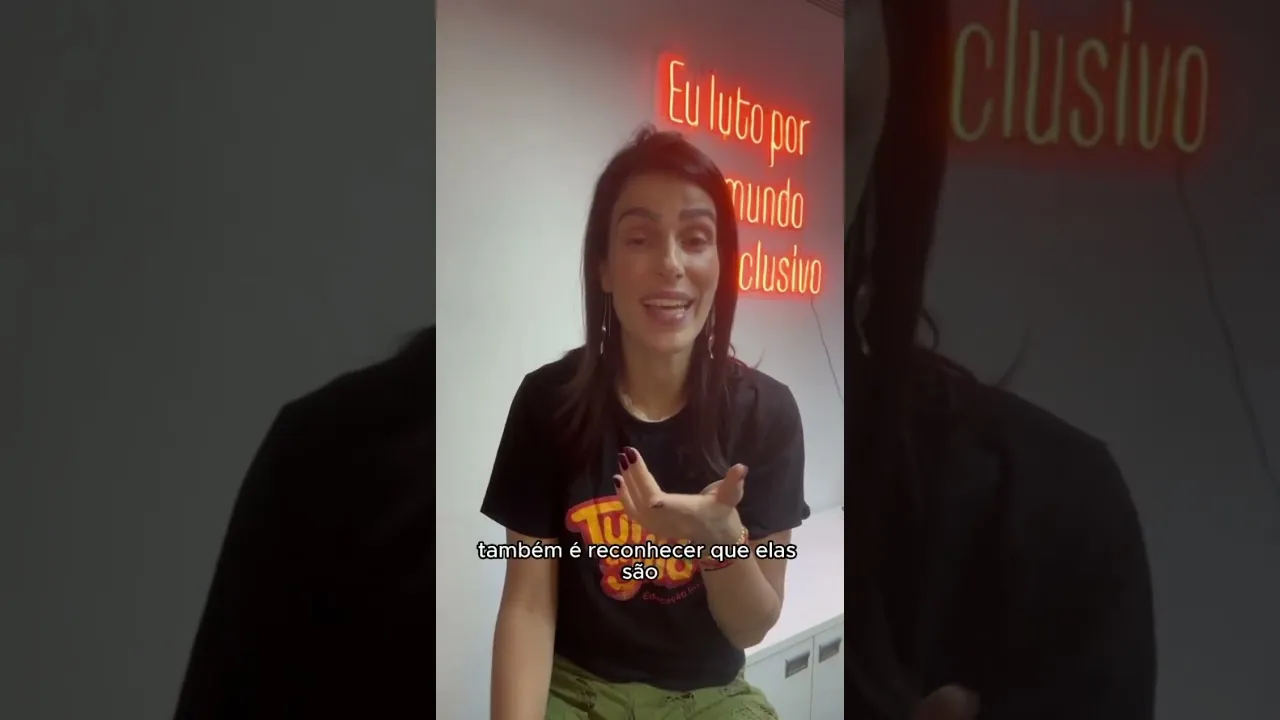
On International Day of Persons with Disabilities, we are invited to a deep reflection on the true meaning of inclusion. The voice guiding us in this content from Turma do Jiló challenges us with three crucial questions that, if answered honestly, can be the starting point for a truly inclusive society. Turma do Jiló, an ecosystem dedicated to Inclusive Education in Brazil, reminds us that inclusion is a daily practice, not just a date on the calendar.
Inclusion Is Not Just About Letting People In
The first question is direct: 'Does my environment truly include people with disabilities, or does it just let them in without real participation?' Inclusion goes far beyond merely allowing entry. It's about ensuring access, full participation, autonomy, and development. A truly inclusive space offers the necessary tools and adaptations so that everyone can contribute and thrive. Simply 'letting people in' is not inclusion; it's just presence. For inclusion to be effective, bridges must be built and barriers removed, whether physical, attitudinal, or communicational.
Challenging Ableism in Everyday Life
The second reflection confronts us with ableism: 'When I meet a person with a disability, do I assume they are capable, or do I let ableism speak louder and immediately imagine they can't do it?' It is essential to presume the capacity of others. Ableism manifests when we assume, without question, that a person with a disability needs help or is incapable. The correct approach is respect: 'May I help you?' Asking demonstrates consideration and recognizes the individual's autonomy. Offering help without asking is a subtle but harmful manifestation of ableism.
The Power of Leadership by People with Disabilities
The third question is a call for recognition: 'Am I listening to people with disabilities, or am I speaking for them?' True inclusion means recognizing that people with disabilities are the protagonists of their own stories. The maxim 'Nothing About Us, Without Us' is the cornerstone of this principle. Their voices, experiences, and perspectives are indispensable for building truly effective policies and practices. Listening to and amplifying these voices is an act of justice and a fundamental pillar for a more egalitarian society.
If these questions resonated with you, remember: inclusion is not a seasonal topic, restricted to commemorative dates. It is a daily practice, an ongoing commitment. Turma do Jiló is dedicated every day to building truly inclusive public education, ensuring that no child with a disability is left behind. Your donation, of any amount, helps secure the right to education for thousands of children. Let's move forward together, leaving no one behind!