Education
The Neurotypical Syndrome: Challenging a Narrow Perspective
Discover how the "neurotypical syndrome" impacts society and the importance of neurodiversity.
Turma do Jiló discusses the "neurotypical syndrome," a social perspective that can harm everyone. Understand the importance of neurodiversity for building a more just and welcoming society. Join this transformative mission.
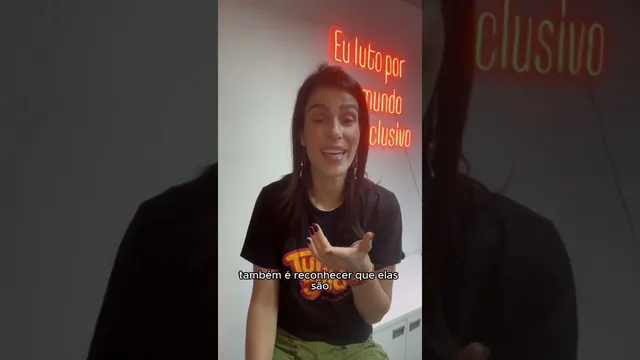
Turma do Jiló, an inclusive ecosystem actively promoting Inclusive Education and Diversity in Brazil, invites us to a deep and provocative reflection: the so-called "neurotypical syndrome." In this essential dialogue, the organization, widely recognized for its transformative work, challenges us to examine how certain social constructs can be limiting and even harmful, while reaffirming the power of inclusion as a pillar for building a genuinely welcoming and just society. The idea is to raise our awareness and remind us of the importance of acting together.
PUBLICIDADE (GAM) — 1250x250
"Neurotypical Syndrome": A Critique of Limited Social Views
The term "neurotypical syndrome," as presented by Turma do Jiló, is not a formal medical condition, but rather a sharp social critique. It describes the often unconscious adherence to a shallow, narrow, and unperspective social view – a set of norms, expectations, and standards considered "normal" or "standard." This homogeneous mindset tends to ignore the vast and rich tapestry of human diversity, its complexities, and its varied ways of existing.
This limited view has serious consequences: it can harm not only those who don't fit into established patterns, but also society itself. By restricting what is acceptable in terms of behavior, cognition, and interaction, it generates exclusion, prejudice, and a lack of understanding, hindering the flourishing of unique talents and perspectives. It is an explicit invitation to question the structures that, unknowingly, constrain our capacity to be and to welcome.
Neurodiversity: Celebrating the Multiple Ways of Existing
In stark contrast to this "syndrome" of narrow vision, Turma do Jiló elevates the concept of neurodiversity. For the organization, "neurodiversity is us" – a powerful affirmation that variation in human minds is as natural and valuable as biodiversity in the natural world. There isn't a single "correct" brain model; there is an infinite number of ways the brain can function.
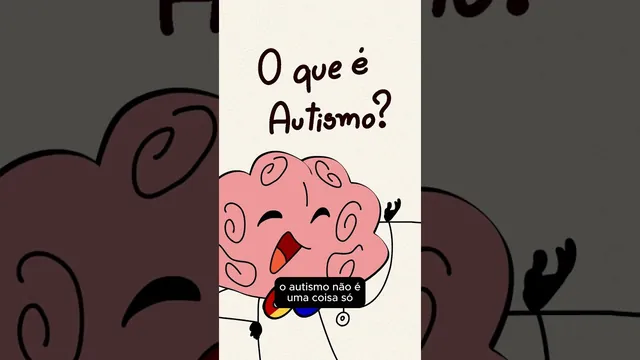
Neurodiversity encompasses all people, including both neurotypical and neurodivergent individuals (those with neurological characteristics such as autism, ADHD, dyslexia, among others). The central point of the discussion is that "neurotypicality," when transformed into a rigid social ideal, becomes problematic, fostering exclusion. By embracing neurodiversity, we pave the way for environments where every mind is valued, understood, and respected in its particularities, ensuring that society benefits from the fullness of its members.
Action and Recognition: The Legacy of Turma do Jiló
Turma do Jiló doesn't just initiate discussions; it embodies change. With the recognition of the Social Entrepreneur of the Year Award and the UN Award, the organization solidifies its role as a driving force in Brazilian social transformation. Its tireless work focuses on raising awareness and empowering schools and companies to become true pillars of Inclusive Education and diversity.
Through initiatives focused on crucial themes such as Gender Equality, Race and Ethnicity, and Mental Health, Turma do Jiló works in alignment with the UN 2030 Agenda. Its objective is clear: to build bridges, ensure accessible spaces, and prepare professionals for a future where inclusion is not an exception, but the norm. It is living proof that collaboration and commitment can create a lasting impact, ensuring that, in the journey of life, truly "no one is left behind."
This provocation from Turma do Jiló is a powerful call to action. By understanding the implications of the "neurotypical syndrome" and engaging in the celebration of neurodiversity, we gain the tools to collectively build a more empathetic, just, and fully inclusive society, where the uniqueness of each individual is seen as an invaluable treasure.
PUBLICIDADE (GAM) — 1250x250