Education
Inclusion in Focus 2023: Lessons in Diversity and Audacity
The boldness of Turma do Jiló and the lessons from Inclusion in Focus for a more diverse and just society.
The Inclusion in Focus 2023 Forum, promoted by McDonald's and Arcos Dorados, addressed crucial themes like racism and ableism. Turma do Jiló shared their inspiring journey, highlighting the importance of education and audacity in promoting diversity and fighting exclusion. It served as a call to action for everyone to become agents of change.
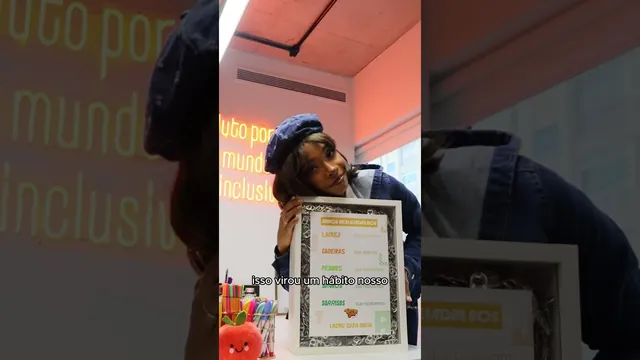
At the Inclusion in Focus 2023 event, promoted by McDonald's and Arcos Dorados, Turma do Jiló was present to share valuable insights on racism, ableism, and the urgent need for a more inclusive society. Mariana Augusto, Communications Manager for Arcos Dorados' Brazil Division, opened the day by reinforcing the commitment to diversity and inclusion, inspired by Black Consciousness Day (November 20) and International Day of Persons with Disabilities (December 3). The main objective: to inspire everyone to be agents of transformation in their own environments.
PUBLICIDADE (GAM) — 1250x250
Historical Challenges of Including Persons with Disabilities in Brazil
The discussion on the rights of persons with disabilities in Brazil reveals a recent and still-developing trajectory. The first right emerged in 1975, but the Quota Law, which boosted employability, only came into effect in 1991. In 1994, inclusive education began to be debated, allowing persons with disabilities to study in regular schools – a crucial advance in combating invisibility. The most recent milestone is the Brazilian Inclusion Law (LBI) of 2015. In 2022, IBGE revealed that 8.9% of the Brazilian population, or 18.6 million people, identify as having some disability. Of these, only 26% have an occupation, with 55% in the informal sector.
A crucial point raised was the alleged "lack of qualified professionals." Although 63% of persons with disabilities do not complete elementary education, 7% are graduates. This may seem small, but 7% of 18.6 million represents over 1.2 million people with higher education. This raises the question: are companies truly looking in the right places or using the lack of qualifications as a justification for exclusion?
The Impact of Racial Relations in the Corporate World
Another speaker delved deeper into the discussion of racial relations, highlighting how the racial issue shaped his own history and trajectory. He emphasized the importance of the Durban Conference in South Africa at the end of the 20th century, where Brazil acknowledged itself as a racist country and committed to creating public policies to combat racism. This turning point prompted the corporate sector to also act, recognizing that society does not change without the participation of the private sector.
Furthermore, the rise of social media and communication channels, such as Mundo Negro, was highlighted as fundamental for constructing a positive Black identity. By combating the "brutality" of racism that denies this construction, these channels enhance visibility and knowledge about Black history and culture, directly impacting the debate on diversity and inclusion in companies.
Carolina Videira: Empathy, Audacity, and Turma do Jiló
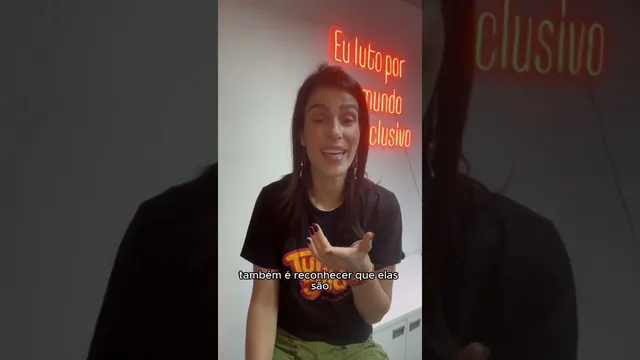
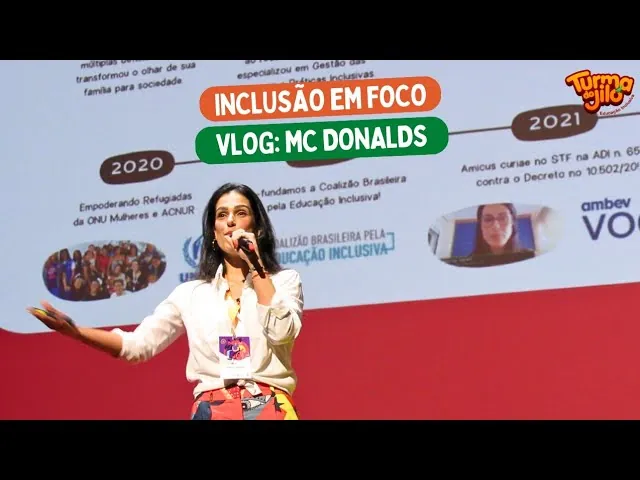
The founder of Turma do Jiló, Carolina Videira – or Carola, as she prefers to be called – moved everyone with her story. A neuroscientist and social entrepreneur, Carola recounted the turning point in her life in 2008 with the birth of her son João. After João's diagnosis of multiple disabilities and the medical prognosis that he would not survive or develop, Carola faced a dilemma at work: choose between a brilliant career and motherhood. Her audacity led her to resign and found Turma do Jiló, an ecosystem of inclusive practices.
The organization grew, winning awards and expanding its methodology. During the 2020 pandemic, in a moment of crisis and resource scarcity, Turma do Jiló demonstrated its resilience by daring to seek solutions. In partnership with the UN, the team traveled to Boa Vista to train refugee women with disabilities who were forgotten in shelters, successfully employing all of them, proving that "leaving no one behind" is possible with training and information.
Inclusion as a Choice and the “Neurotypical Syndrome”
Carola also shared her grief over the loss of her son João, at age 14, in 2021. Despite the pain, she found the strength to continue her mission. Inspired by Vygotsky, she states: "We are not born human; we become human. And being inclusive is a choice." There is no "half-inclusion"; the choice is individual and collective.
For companies, Carola is direct: either they are inclusive, or they will remain unhealthy. She presents a provocative concept: the "neurotypical syndrome." This is not a medical condition but a critique of a shallow, narrow, and unperspectived social view that sickens relationships and hinders the advancement of diversity. Neurodiversity is all of us; neurodivergence refers to some, but the "neurotypical syndrome" is the limiting belief that excludes. Carola concludes with a powerful call: together, we can make a difference and ensure that no one is left behind.
This event reinforced the message that the fight for inclusion and diversity requires courage, knowledge, and each individual's willingness to be an agent of change. The story of Turma do Jiló is a testament that, even in the face of the greatest adversities, audacity can generate profound transformations and build a more just future for all.
PUBLICIDADE (GAM) — 1250x250