Education
Demystifying Gender and Sexuality: Combating LGBTphobia
Lucas Dantas and Turma do Jiló Address Diversity and Combating Prejudice in an Essential Dialogue
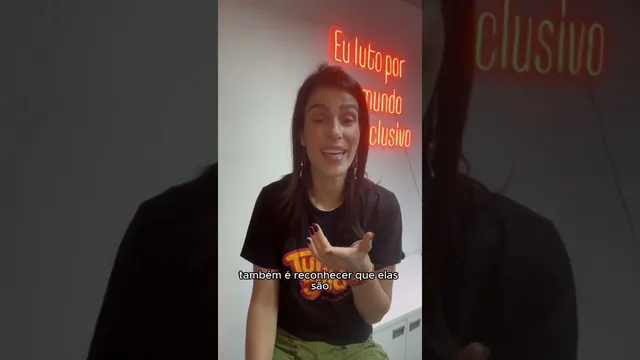
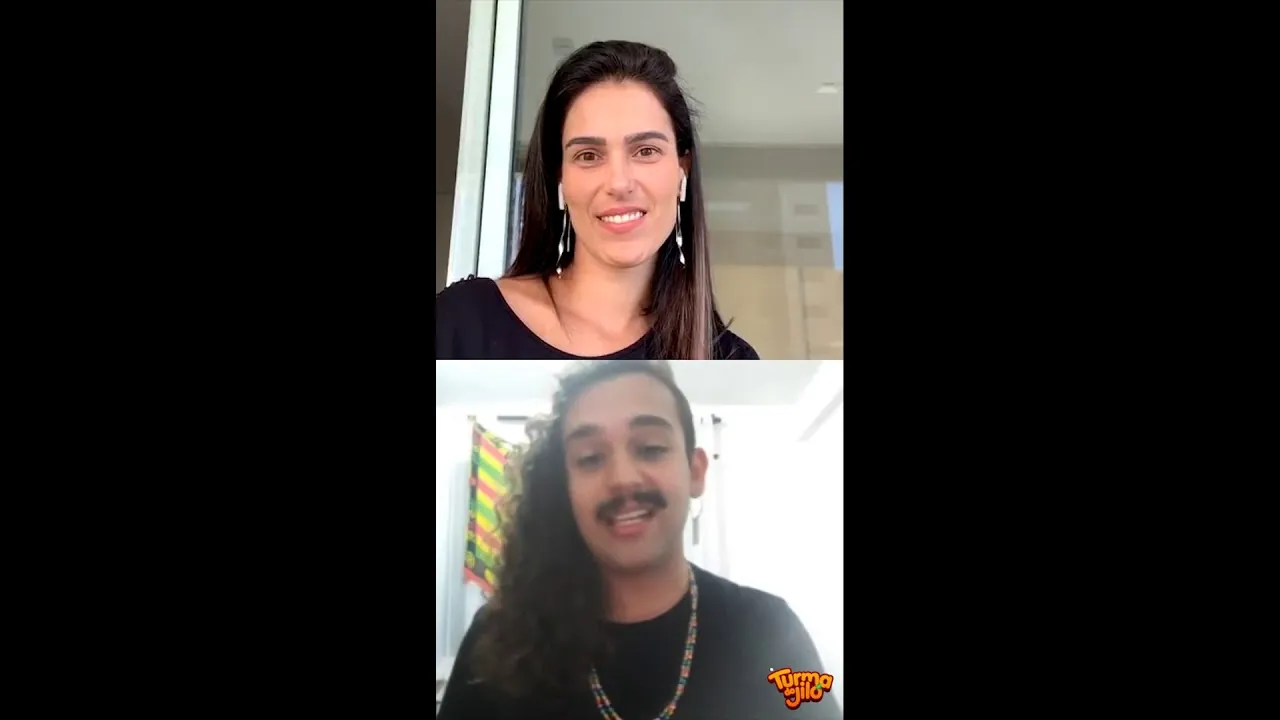
In a special live session on the International Day Against LGBTphobia, professor and master Lucas Dantas, joined by Carol from Turma do Jiló, unravel the concepts of gender and sexuality. The discussion delves into the importance of inclusive education to build a more welcoming and just society, combating prejudice with information and empathy. Discover how to break taboos and foster respect in all environments.
On the symbolic date of May 17th, International Day Against LGBTphobia, Turma do Jiló, represented by Carol, hosted professor and master Lucas Dantas for a transformative conversation. Turma do Jiló, an inclusive ecosystem, emphasizes that inclusive education transcends disability, embracing diversity in its multiple facets: races, cultures, religions, and of course, sexual orientations and gender identities. The central objective is to combat prejudice with information, demystifying old beliefs, and making way for the new.
Lucas Dantas, who studies gender issues in his master's degree at PUC and is responsible for the gender and sexuality module in the postgraduate program at Instituto de Singularidades, highlights that the LGBT+ community is plural. It is essential to understand that indigenous, Black, disabled, or people from different religions can also be LGBT+. Society often homogenizes this community, but diversity is its essence. To speak of the body is to speak of gender, race, and sexuality, and this is a global and fundamental agenda, not a secondary one.
PUBLICIDADE (GAM) — 1250x250
Unraveling Gender and Identity
A crucial point of the conversation is the distinction between gender identity and sexuality, which are often confused. Lucas explains that the concept of gender as a cultural construct began to be strongly discussed from the mid-20th century onwards, challenging the view that gender is purely biological. Simone de Beauvoir's phrase, "One is not born, but rather becomes, a woman," perfectly encapsulates this idea: identity is a process of construction, a continuous achievement of autonomy throughout life.
Cisgender and Transgender Identities
Society has imposed binarity (man/woman) as the only path. Cisgender identity is the identity of someone who identifies with the gender assigned at birth based on their genitals. Transgender identity, on the other hand, encompasses those who decouple from this gender script, experiencing other performances. This includes transgender women, transgender men, and non-binary people, like Lucas himself. Non-binary people do not identify exclusively as a man or a woman, and this identity is also trans, as it is not cisgender. This breaking of gender norms is, in itself, a protest against the violence of having to fit into just two categories.
The Fight for Inclusive Language and Education
The proliferation of gender terms and classifications, while it may seem complex, is vital for visibility and the struggle for recognition. "Only what is named exists," Lucas reiterates. Naming an experience gives it legitimacy and removes it from uncertainty. This is evident in intersex bodies, who are born with biological variations and often suffer mutilations and violence for not fitting into the binarity. The term intersex emerges to give visibility to this struggle, just as happens with the diversity of autism or other disabilities.
Education is the way to change this reality. Lucas emphasizes that there is no age limit for discussing gender and sexuality, but rather different pedagogical approaches. The refusal to discuss these topics in schools, often motivated by a political agenda that attempts to shield children from diverse experiences, is a symptom of insecurity and fear of diversity. The role of the adequately trained teacher is crucial to bring this information to children, generating a positive conflict that reaches families and promotes openness.
Challenges of Gender-Neutral Language
The discussion about gender-neutral language reflects the need for a less binary and more inclusive language that does not privilege the masculine. Attempts such as using 'x', '@', or 'e' face accessibility challenges, especially for visually impaired people who use screen readers. The community seeks solutions that do not exclude, advocating for a neutral communication manual that prioritizes omitting the masculine article where possible, for a more plural and universal language.
Inclusion Beyond Marketing: The Role of Institutions
LGBTphobia and prejudice lead to school dropout and social exclusion. Research, such as that by ABGLT (Brazilian Association of Gays, Lesbians, Bisexuals, Transvestites, and Transsexuals), shows that many LGBT+ students cannot use spaces like bathrooms or changing rooms in schools, and face physical and verbal violence. In the workplace, over 70% of LGBT+ individuals do not come out due to fear of prejudice, highlighting the need for companies to adopt responsive attitudes that go beyond rainbow washing during Pride Month.
Institutions (schools, companies) need to rethink themselves profoundly. Inclusion is not superficial; it requires understanding the problems of communities, deconstructing ingrained concepts, and making space for diversity. Grada Kilomba's phrase, "I do not suffer prejudice because I am different. I am different because I suffer prejudice," illustrates the root of the issue. Meritocracy fails in an unequal world, and institutional hostility creates barriers. Inclusion involves continuous employee training, projects implemented in all areas, and an awareness that everyone is responsible.
Love as a Tool for Transformation
Symbolic violence—looks, speech, the way we are positioned—acts stealthily. Combating this requires empathy and affection. Lucas Dantas emphasizes that the deprivation of affection is at the root of many painful experiences. The fight for inclusion is a movement of love, seeking a dignified and respectful life for all. There is no hierarchy of oppression; all of us can be impacted by prejudice. Collective consciousness and dialogue are essential to build new possibilities.
Understanding that inclusive education and combating prejudice are everyone's business is the first step. The path is love, empathy, and the awareness that, together, we can build a more just and welcoming world where no one is left behind.
PUBLICIDADE (GAM) — 1250x250