
Murillo Caldas on the Origins of Scuba Mergulho
Founded in 1988 in the ABC Paulista region, the dive school paved the way for safety support and open-water swimming expeditions.
In an interview on the Natação Stemma podcast, Murillo Caldas looked back at the 1988 founding of Scuba Mergulho and the start of his aquatic journey. He shared how the venture began in Greater São Paulo and how providing safety support for marathon swims bridged diving and swimming.
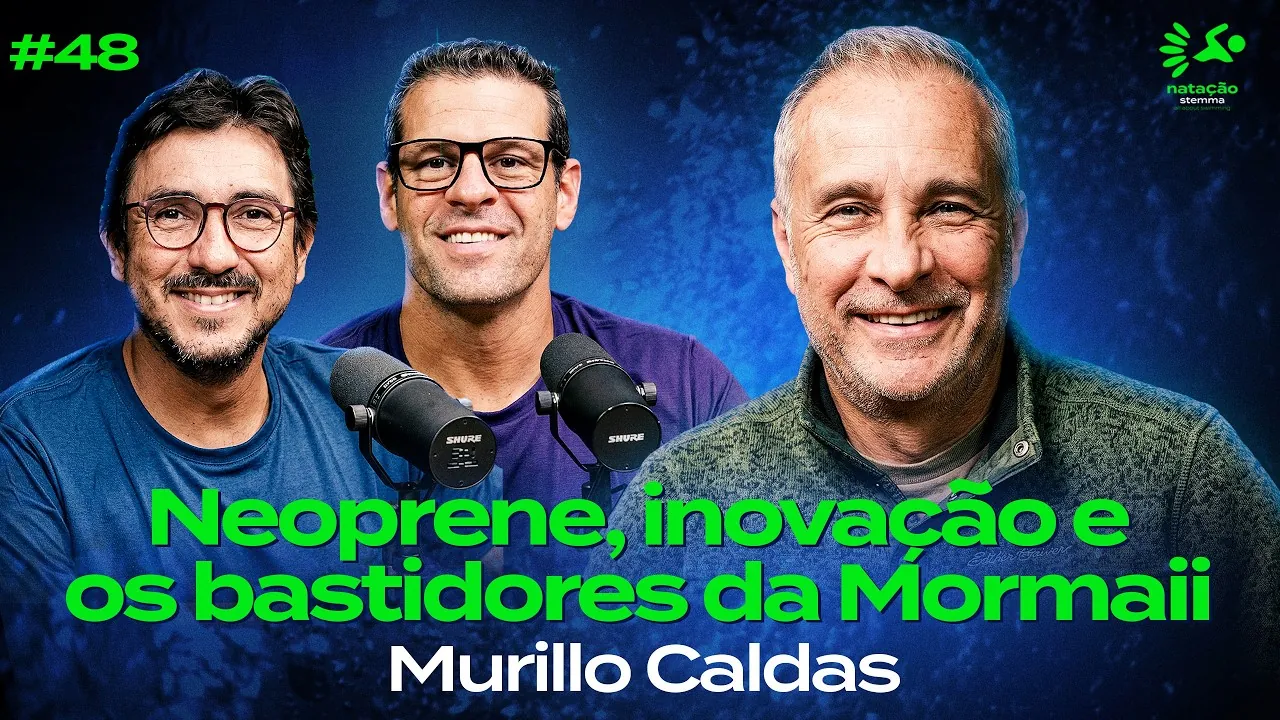
Before leading aquatic gear innovation projects, Murillo Caldas's professional relationship with the sea began unassumingly in the late 1980s. Appearing as a guest on episode 48 of the Natação Stemma podcast, he reflected on how founding Scuba Mergulho proved to be a turning point for his technical work in marine environments.
From recreational swimming to professional diving
Although he swam from childhood and took part in youth swim meets, Murillo never pursued high-performance competitive swimming. Swimming, however, served as an essential foundation for his work in scuba diving. Operating dive outings and training instructors and divemasters required strong watermanship alongside rescue and first-aid skills to ensure student safety.
The challenges of launching Scuba Mergulho in 1988
Scuba Mergulho was established in 1988 in São Bernardo do Campo through a partnership between Murillo and two childhood friends, all between 17 and 19 years old at the time. In an era when access to high-end gear was limited in Brazil, the group took on the hands-on challenge of building the business from the ground up, securing pool space at local fitness clubs to run practical training sessions.
It was throughout this gym circuit in the ABC region that Murillo built relationships with historic figures in Brazilian swimming, such as coach Alexandre Iannini, known as "Indi." Sharing pool decks brought the routine of diving classes closer to swim training, creating lasting connections that remain strong today.
Pioneering safety support for open-water swims
The transition to the open-water scene accelerated when training moved to Academia Atlântica, run by Alex and Aginaldo. The gym organized pioneering expeditions and challenges at the time, including crossings at Indaiá Beach and open-water swimming expeditions to the Alcatrazes Archipelago.
The Scuba Mergulho team began joining these expeditions to provide safety infrastructure, deploying inflatable boats and dedicated divers to protect open-water swimmers. This practical field experience gave Murillo direct insight into the real-world demands of marathon swimming, building an aquatic background that would later inform his work in developing sports equipment.