
How Small and Medium Businesses Can Adopt AI in Practice
Pedro Daniel explains the value of gradual testing, unifying data through CRM, and focusing on communication.
In a conversation on Marketing - The Podcast, Pedro Daniel outlines practical steps for SMBs to implement artificial intelligence. The discussion covers small-scale testing, data integration, and the limits of sales automation.
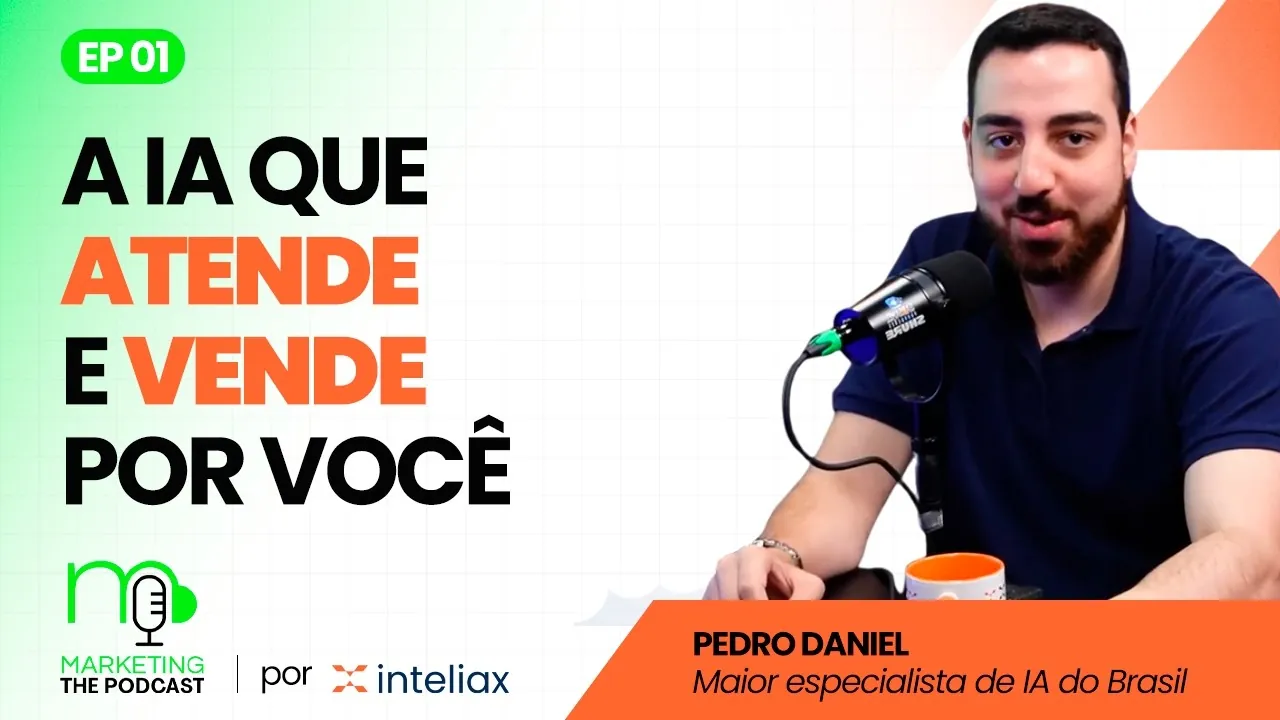
Pedro Daniel, creator of Escola de IA, spoke with Bruno Gimenes on Marketing - The Podcast about practical paths for small and medium-sized businesses to begin implementing artificial intelligence into their operations.
For Daniel, the starting point of any technological transformation lies not in the tools, but in the organization's mindset. The full episode in the video above features workflow demonstrations and details on the applications discussed during the conversation.
Culture and small-scale testing
According to Daniel, the priority for anyone looking to structure technology use is preparing employees for everyday tool usage before pursuing complex automations. He warns against abruptly replacing teams with automated solutions without prior quality validation.
"The first thing is to adapt the company culture to artificial intelligence. Like I said, artificial intelligence won't solve every problem, but the moment you encourage employees to use AI, you're already building it into the culture, even if it's for simpler tasks at first," Daniel states. He adds: "You start with culture, and then you begin to understand which departments AI works best in based on testing, and you test on a small scale."
Unifying processes starting from the CRM
Addressing data architecture, Daniel points out that smaller businesses hold a competitive edge in integration agility compared to large corporations, which frequently operate across dozens of scattered spreadsheets and disconnected systems.
The recommendation is to centralize operational workflows into a single foundation, starting with customer relationships: "Gradually introduce AI, build a unified system across the company, start small, begin with a CRM, and expand it into other areas. So you start with a CRM, then expand within the CRM itself—add that lead demand part, align it with the sales team, then move to finance, integrate finance into the system, and that's how you make adjustments and unify your data."
The shop floor and the limits of automation
To identify the real bottlenecks technology needs to solve, Daniel advocates going directly to daily operations rather than relying solely on executive reports.
"The secret is on the shop floor. That's where you actually find the real problem. Up top, everything looks fine and wonderful; things arrive neat and tidy, mapped out on paper. But when you go down to the shop floor, that's when you discover where the real problems are," Daniel emphasizes. He also highlights that high-value consultative sales processes still require human connection: "There are many things artificial intelligence cannot replace and won't replace anytime soon, especially anything involving humans interacting with humans."
Communication fundamentals before tools
Given the rapid evolution of platforms like ChatGPT, N8N, and Claude Code, Daniel argues that mastering a specific software is secondary to conversational clarity.
"If you're thinking about AI tools and expecting a specific tool to solve your problem, you need to understand the fundamentals of AI. The first thing you need to learn is how to communicate. The foundation of artificial intelligence is communication. Once you learn how to communicate, you can use any tool available on the market," Daniel highlights.
The adoption landscape in Brazilian companies
Discussing the pace of transformation in the country, Bruno shared national market data highlighting the window of opportunity for smaller organizations.
Bruno notes that a 2025 FGV survey shows that 61% of Brazilian SMBs have yet to adopt any AI tools, while 78% express interest in starting within the next 12 months.