
How Afesu Combines Technical Training and Human Support
Sonia de Almeida discusses NGO governance, the three-pillar educational model, and corporate partnership opportunities.
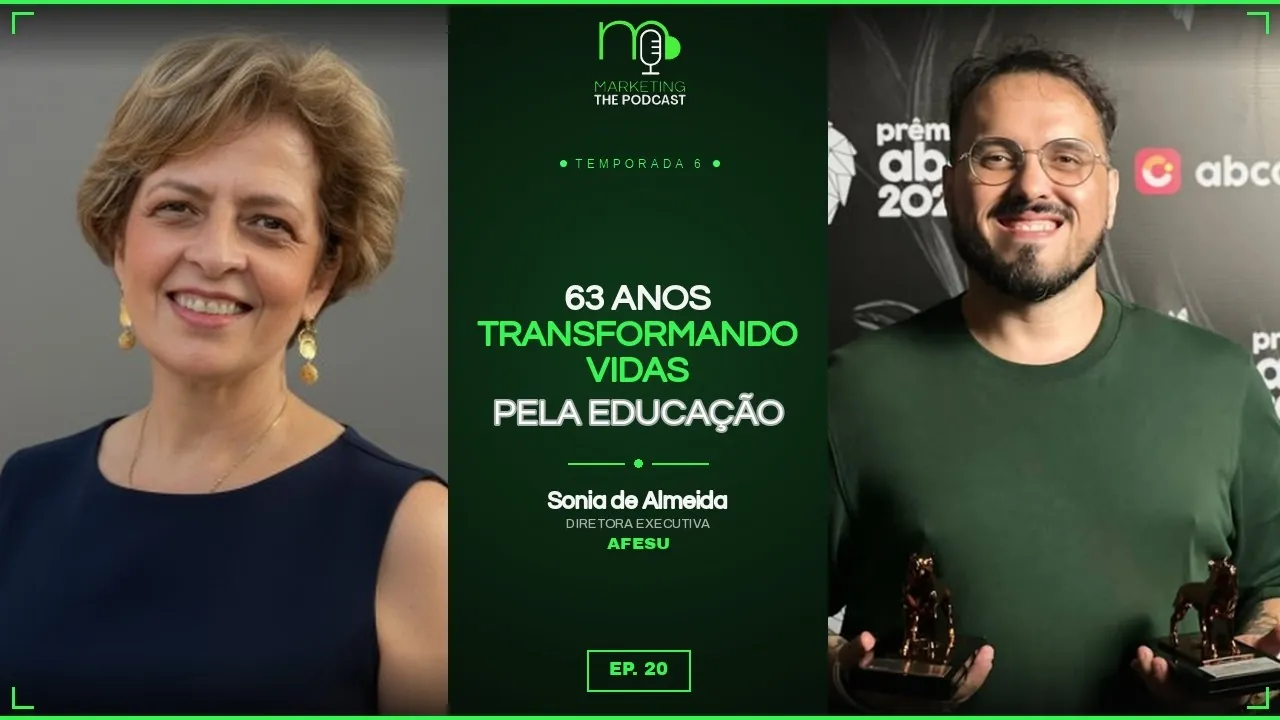
In an interview with Bruno Gimenes on Marketing - The Podcast, Sonia de Almeida shares how Afesu delivers technical training and socio-emotional support to vulnerable girls and women. The executive director addresses nonprofit financial sustainability and the importance of workplace inclusion.
Sonia de Almeida, executive director of Afesu, joined Marketing - The Podcast to discuss how the nonprofit organization empowers vulnerable girls and women through education in São Paulo.
In the video above, Almeida discusses nonprofit governance, the educational methodology applied across the organization's centers, and how the corporate sector can get involved through partnerships and volunteering.
Sonia de Almeida's professional journey
With a degree in business administration and a background in corporate planning, budgeting, and project management, Almeida has always maintained strong ties to education and volunteer work. After teaching and working in business development, she took over leadership of an Afesu center before becoming the organization's executive director.
"What really helps me lead this NGO today is precisely all the experience I gained in the corporate sector," explains Almeida, describing how corporate expertise strengthens internal processes within the organization.
Purpose and management challenges in the nonprofit sector
Transitioning from a corporate career to a nonprofit organization required adapting to a leadership structure overseeing multiple operational fronts. Almeida points out that social impact must align with financial discipline to meet the R$ 10 million annual operating budget across three centers.
"The moment you give someone an education, you give them the freedom and tools they need to grow, both personally and professionally," highlights Almeida on her decision to apply her expertise to NGO management.
The history of Afesu and the three-pillar methodology
Founded 63 years ago in Jardim Taboão, Afesu began by teaching traditional Arraiolos tapestry embroidery to help boost local family incomes. Over time, the organization expanded its reach to younger demographics and now operates centers in Jardim Taboão (Morro Velho), Vila Missionária (Velheiros), and Cotia, serving approximately 900 female students per year through modular and vocational technical courses.
The pedagogical approach is built on three pillars: technical training, socio-emotional development, and family engagement. In addition to hands-on classes, the program includes one-on-one mentorship sessions called preceptorships and bimonthly meetings with parents and guardians. "Our purpose goes far beyond technical skills. What do we want? We want to help shape better women and better human beings," says Almeida.
Social awareness, leadership, and workplace inclusion
During the conversation, Bruno and Almeida discuss the evolution of corporate practices and the need for leaders to cultivate empathy for the diverse backgrounds of their employees. According to Almeida, the rise of corporate ESG initiatives has fostered employee volunteering and created room for structured mentorship programs.
Almeida emphasizes that female inclusion in the workplace requires genuine support policies and an understanding of employees' day-to-day realities. "It's not enough to just say your company includes women. Inclusion is good, but it's not just about hiring women," the director notes, advocating for individualized support across teams.
Stories of resilience and real-life impact
The impact of the educational program is evident in the journeys of alumni who have secured positions in both the domestic and international job markets, as well as those who have returned to the organization as staff or volunteers. Almeida shares the recent example of an alumna hired by a partner company who was transferred to work in the United States.
"We have stories of parents who went back to school because their daughter was studying at Afesu," Almeida shares, highlighting how boosting young women's self-esteem often transforms entire family dynamics.
Corporate partnerships and supporting Afesu
Because Afesu's programs are 100% free for students, operational sustainability relies on individual donations—through programs like Nota Fiscal Paulista and tax-deductible donations—as well as corporate partnerships. Companies can sponsor structured projects, support individual students, or fund sponsored training classrooms, a model adopted by corporate partners.
"If you want to transform the world, support education. It's truly about giving human beings the tools to become better," concludes Almeida, noting that contact information is available on the organization's official website and institutional social channels.