
"Hiring Alone Isn't Enough," Sonia de Almeida on Inclusion
Afesu's Executive Director analyzes the evolution of ESG and the need for individualized workplace support.
In a discussion on leadership and social responsibility, Afesu Executive Director Sonia de Almeida emphasizes that genuine inclusion requires structured corporate policies and an understanding of individual realities. The conversation highlights the transition from isolated charitable acts to continuous ESG practices.
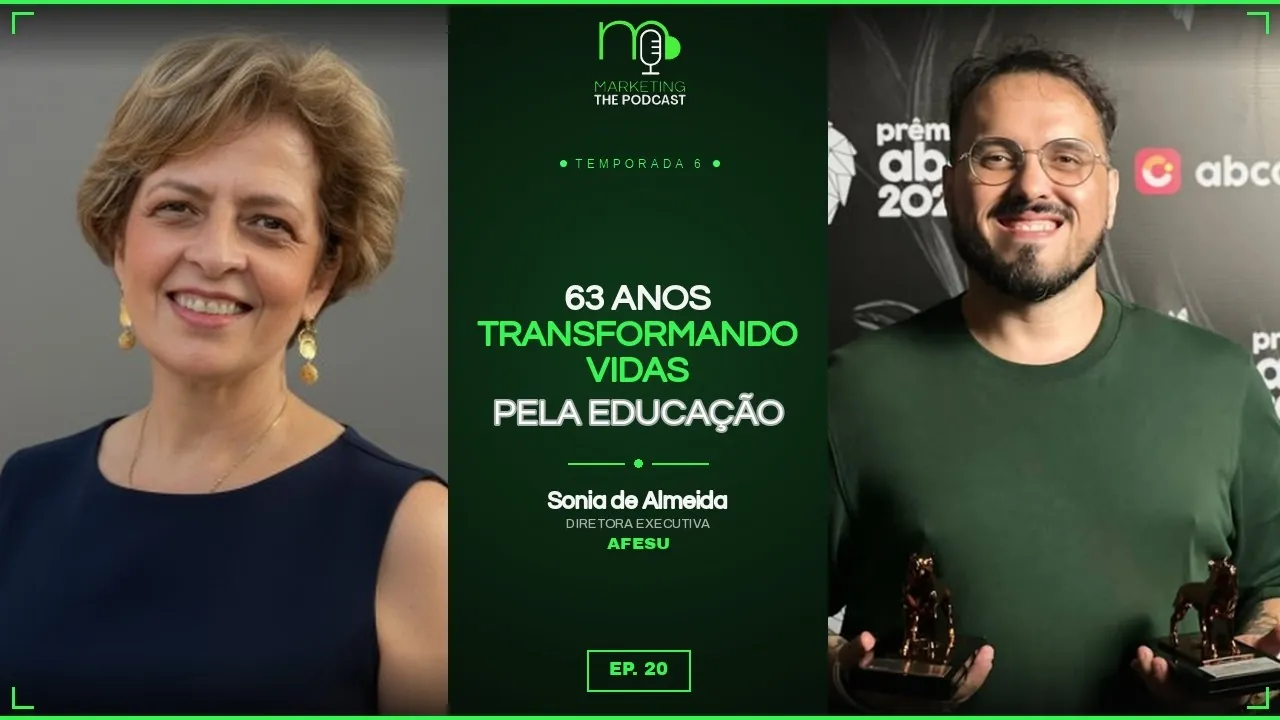
Sonia de Almeida, Executive Director of Afesu, joined Bruno Gimenes on Marketing - The Podcast to discuss the importance of social awareness in corporate leadership and the true benchmarks for workplace inclusion. The full episode also explores the organization's institutional journey and its educational methodologies designed for the non-profit sector.
In the video above, the conversation focuses on the need for business leaders to understand the complexity of their employees' individual lives, looking beyond superficial productivity metrics.
Social Awareness and the Role of Leadership
The discussion addresses how leadership perception of vulnerabilities and family challenges directly impacts team management. Gimenes notes that direct exposure to non-traditional circumstances reshapes a manager's mindset and exposes the shortcomings of simplistic narratives focused solely on individual effort, underscoring that real productivity depends on understanding each person's context.
Almeida agrees on the need for a personalized approach and explains that this same principle guides their work with the young women supported by the organization. According to her, the support provided must account for the specifics of each journey: "It is not the same for everyone. Even with our students, we strive for this individuality. I cannot offer support in a one-size-fits-all way; it has to be truly individualized."
From Sporadic Charity to Structured ESG
Reflecting on the evolution of the Brazilian market, Almeida expresses optimism regarding the shift in corporate behavior over recent years. According to her, modern media has expanded access to information and helped normalize discussions surrounding inclusion and neurodiversity that were once confined to the family sphere.
This cultural shift has also reshaped how companies engage with social causes. While initiatives used to be limited to seasonal donations, they are now institutionalized within structured programs. "There were no ESG departments inside companies. There were just one-off actions, like handing out holiday food baskets at Christmas," Almeida points out, highlighting the rise of corporate volunteering programs where professionals provide pro bono mentoring to youth.
Women's Inclusion Goes Beyond Hiring
Addressing female workforce participation specifically, Almeida emphasizes that numerical quotas alone are not enough to establish real diversity. Retention and career growth demand internal policies that respect practical needs, such as motherhood and caregiving responsibilities.
"It's like saying: our company includes women. Sure, but inclusion is not just about hiring women," Almeida asserts. While acknowledging that remote work has delivered real benefits, she argues that fostering genuine conditions for retention remains the fundamental challenge: "How do we respect those needs? Do we have policies that truly foster women's inclusion in the workforce?" High-level people management ultimately hinges on the ability to build these structural support systems.