Lifestyle
Visual Impairment and Talent: Avoid Labels and Stereotypes
Discover why talent is individual and not a consequence of physical or sensory conditions
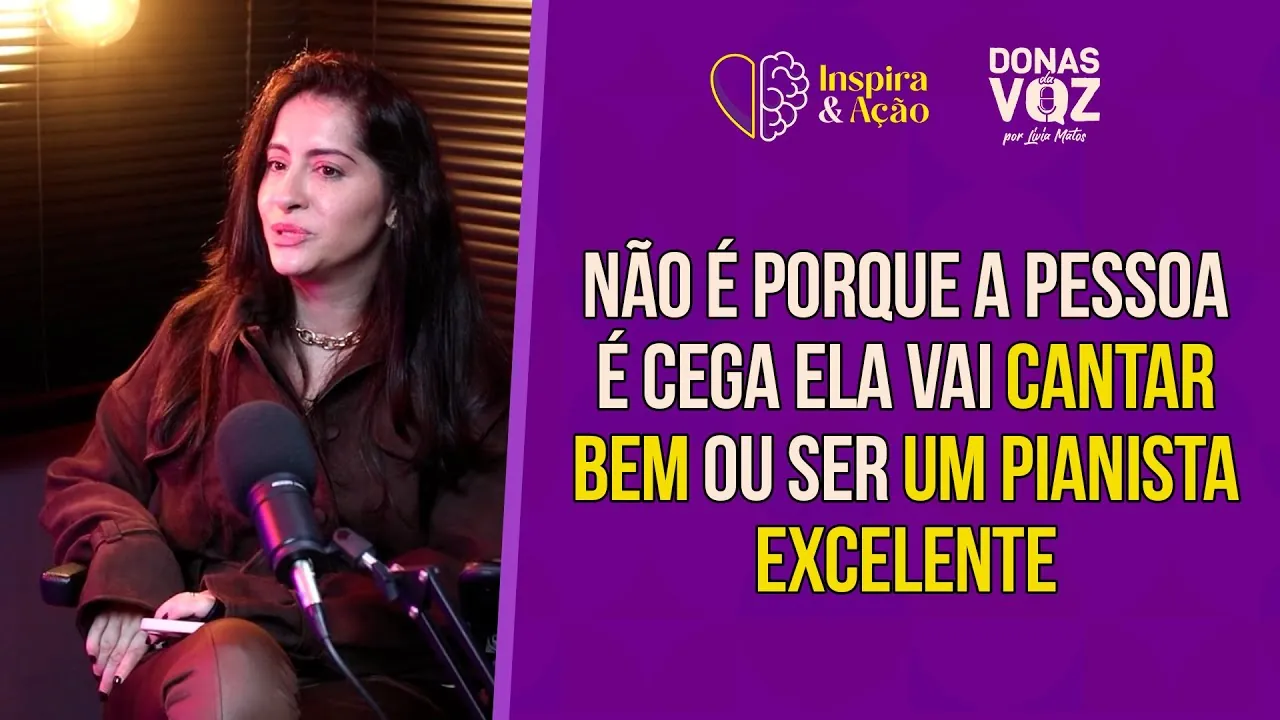
In an interview with Donas da Voz, Dr. Daniela Bortman debunks the idea that visually impaired individuals are automatically exceptional artists. She explains that talent is individual, not a direct result of physical or sensory conditions. It is crucial to avoid labeling and to value each person's unique abilities.
In the "Inspire and Act" segment of Donas da Voz, Dr. Daniela Bortman addressed a crucial topic: the tendency to label people with disabilities and associate their condition with specific talents. The conversation, though brief, highlights the importance of seeing each individual for their unique abilities, rather than through stereotypes.
PUBLICIDADE (GAM) — 1250x250
Debunking Stereotypes About Disability and Talent
It's common to hear the idea that every visually impaired person will, for example, be a good singer or an exceptional pianist. This generalization, as Dr. Daniela Bortman explains, is a dangerous myth. The truth is that talent is an individual characteristic, developed through effort and passion, not a direct consequence of a physical or sensory condition.
The Case of Andrea Bocelli and Misconceptions
The idea that "blind people sing well" or "will be excellent pianists" often arises from notable examples like Andrea Bocelli. He is, in fact, a world-renowned tenor who is visually impaired. However, his talent is the result of his dedication and artistic gift, not because he has a specific visual condition. The same applies to people with amputated limbs who become artists; they are artists despite the challenges, not because of them.
Unique Abilities: Every Person is Singular
Dr. Daniela emphasizes that there is no obvious connection between having a sensory disability and developing a specific artistic talent. Each person, regardless of their condition, possesses unique abilities and their own paths. It is essential to break these labels and allow each individual to explore and develop their own potential, free from preconceived expectations.
Instead of labeling, we should celebrate the diversity of talents and the ability of each woman to overcome challenges. Donas da Voz invites us to reflect on the importance of supporting individual development, free from prejudice, and to value each person's journey in pursuing their goals and dreams.
PUBLICIDADE (GAM) — 1250x250