Lifestyle
Narcissistic Abuse vs. Toxic Relationships: Signs and Escape Routes
Discover the crucial differences and how to free yourself from relationships that steal your voice and self-esteem.
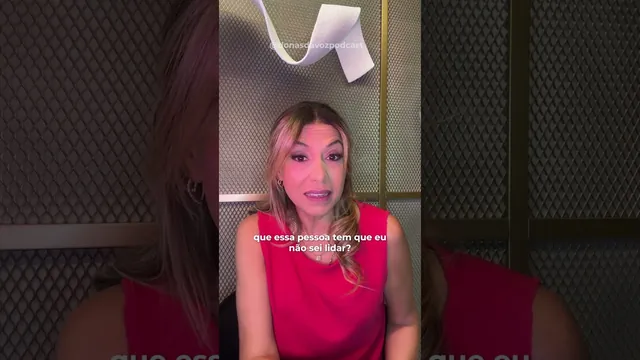
In this episode of Donas da Voz, experts Andreza Thans and Claudia Lisboa unveil the complex challenges of toxic and abusive relationships. They explain the nuances of narcissistic abuse, its insidious signs, and its devastating impact on women's professional and personal lives. Learn how to identify these patterns and build a safe and effective escape route, reclaiming your power and well-being.
The Donas da Voz program, presented by Livia Matos, opened a discussion on a sensitive and urgent topic: abusive and toxic relationships. With the participation of neuropsychologist Andreza Thans and mentor Claudia Lisboa, the episode delves into a letter from a listener who feels "trapped in an invisible cage," in a relationship that transformed from love into control and fear.
PUBLICIDADE (GAM) — 1250x250
Differentiating Relationships: Toxic and Abusive
It is fundamental to understand that not every difficult relationship is narcissistic abuse. Andreza Thans, a trauma specialist, explains the crucial difference:

Toxic Relationships
In these cases, both parties usually have traumas and dysfunctional behaviors. There's a dynamic of "I attack and the other retaliates," where responses are very similar. Discussions can escalate to fights with insults and even physical aggression. There is no premeditated manipulation, and the behavior is often unconscious, stemming from a chaotic upbringing. The good news is that, often, it's possible for both to unlearn and change their behavioral patterns with self-awareness and support.
Signs of a toxic relationship:
- Lack of mutual respect.
- Constant arguments with elevated tone of voice and insults.
- Criticism that turns into offenses.
- A constant feeling of distress and anxiety, not peace.
Abusive (Narcissistic) Relationships
Here, the dynamic is different: there is a conscious manipulator – the narcissist – and a victim. The narcissist acts in a Machiavellian way, planning every step to isolate and weaken the victim. They feel no empathy, and their goal is to feel "fed" by the other's vulnerability. There is no cure for narcissistic personality disorder, and change is extremely unlikely.
Signs of a narcissistic abusive relationship:
- Love Bombing: At the beginning, a "love bomb" with intense declarations, gifts, and quick marriage proposals. This creates idealization and dependence.
- Egocentrism and Manipulation: The narcissist is egocentric, feels no guilt for mistakes, and projects all responsibility onto the victim. They play the victim and use guilt as a weapon.
- Victim Isolation: Gradual distancing from friends and family, undermining the victim's support network so they become completely dependent.
- Gaslighting: A form of mental manipulation where the abuser makes the victim doubt their own sanity and perception of reality, believing they are to blame for everything.
- Restriction of Freedom: Constant criticism, excessive jealousy, and monitoring of the partner's life, creating an "invisible cage."
- Victim's Fear: The victim lives "walking on eggshells," with an enormous fear of what might happen, having no control over the situation.
The Impact on Professional and Personal Life
Claudia Lisboa highlights how abuse extends to professional life. Low self-esteem, constant undermining of competence, and isolation lead to a decline in work performance. In many cases, the abuser demands that the woman abandon her career, aiming for financial and emotional dependence. The account of one of Claudia's students, who only recognized the abuse when her partner tried to intervene in her career, illustrates how work can be a "savior" and the last resort for many women.
Financial abuse is another type of control, where the partner uses the woman's name for businesses and debts, or pushes her out of businesses she started, leaving her with nothing in case of separation. Women, often socialized for romantic love and caregiving, can fall into these traps, taking on a "mother" role that unbalances the relationship.
How to Escape an Abusive Situation: Practical Tips
Andreza Thans offers crucial steps for women seeking to leave an abusive or toxic relationship:
- Rebuild Your Support Network: Discreetly begin to reconnect with close family and friends. Messages, calls, emails can be a good start to reactivating this safety net, which is your support network.
- Regain Your Professional Autonomy: If you are unemployed or dependent, seek online courses, professional training (many free options exist), or resume studies. Financial independence is vital for liberation.
- Seek Professional Help and Support Groups: Therapy is essential for rebuilding self-esteem and understanding the relationship's dynamics. Look for university-affiliated psychology clinics or online and in-person support groups, many of which are free. Donas da Voz is also a safe environment for sharing.
- Do Not Argue with the Narcissist: They lack empathy and will not understand your point of view. Avoid direct confrontations and prolonged discussions, as they will always manipulate the situation to blame you. Stay calm and avoid feeding their dynamic.
- Don't Blame Yourself for Returning: Emotional dependency is real and powerful. It's common for victims of narcissistic abuse to return to the relationship multiple times (science suggests up to seven times) before finally breaking free. Understand that this is part of the process and not a sign of weakness.
Remember: the first step is to acknowledge that you need help. You are not alone. Donas da Voz is here to empower, inspire, and help you transform into your best self. If you need support, send your story to donasdavozpodcast@gmail.com. Together, we are stronger to build a future with freedom and well-being. We are here for you!
PUBLICIDADE (GAM) — 1250x250