Lifestyle
Inclusion: Debunking Myths and Fostering Respect with Daniela Bortman
Learn to build a more inclusive world with practical and respectful tips.
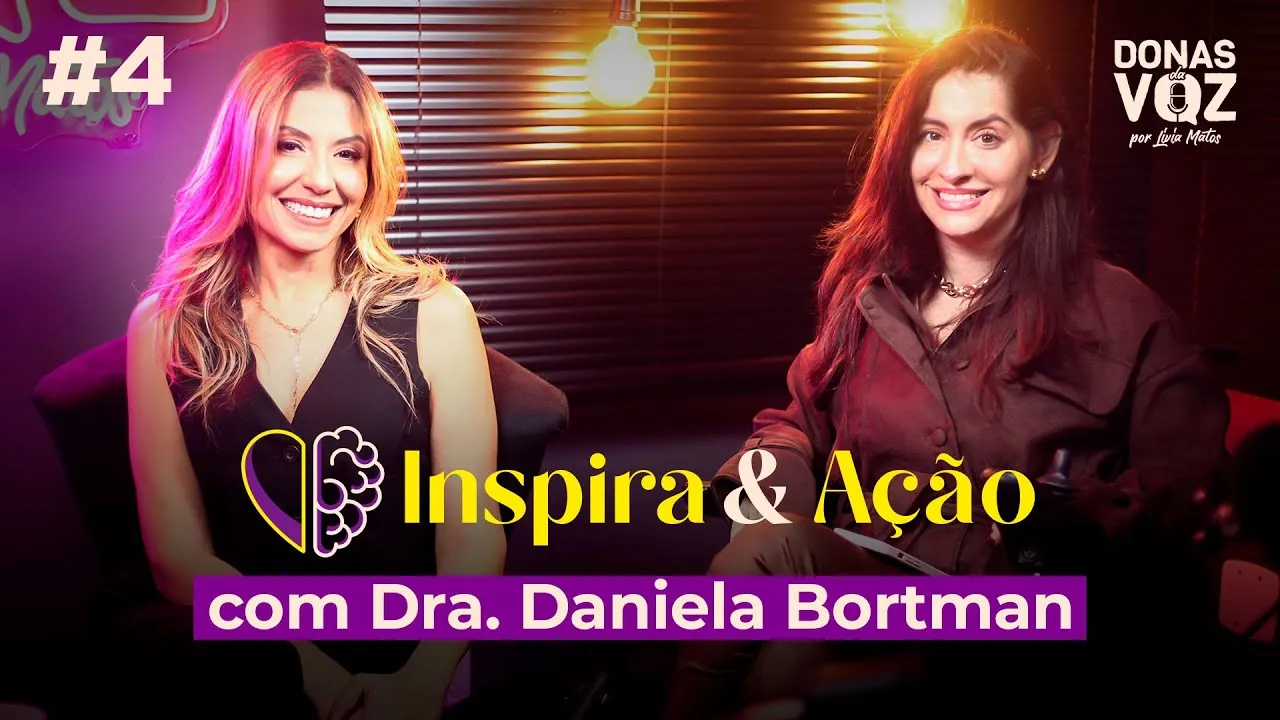
In this transformative episode of Donas da Voz, Livia Matos and Dr. Daniela Bortman, Brazil's first quadriplegic doctor, unveil the secrets of inclusion. They cover everything from correct terminology to offering help without embarrassment, combating ableism, and fostering a more welcoming environment for all. A true masterclass on how respect and equity build a better future.
In the 'Inspire and Act' segment of Donas da Voz, host Livia Matos welcomes Dr. Daniela Bortman, a physician, speaker, and Head of Occupational Medicine and Health at Bayer, renowned for being Brazil's first quadriplegic doctor. This episode is an essential lesson on the inclusion of people with disabilities, addressing topics such as prejudice, rights, and the importance of a more accessible and respectful environment for the over 18 million Brazilians with disabilities, who represent nearly 10% of the population. Dr. Daniela emphasizes that a lack of knowledge is a major obstacle, and open conversation is fundamental to demystify the topic.
PUBLICIDADE (GAM) — 1250x250
"People with Disabilities": The Correct and Respectful Language
One of the first and most important steps towards inclusion is appropriate language. Dr. Daniela Bortman clarifies that the correct term is "people with disabilities" (PwD). She explains why terms like "special needs bearer" are inappropriate: "to bear" implies that the disability can be left somewhere, which is not the case. Similarly, using just "disabled" without specifying is generalized and imprecise, suggesting that the person is "deficient" in their entirety.
It's important to specify the type of disability, for example: "person with a physical disability", "hearing impaired person" or "person with a visual impairment". Contrary to popular belief, Dr. Daniela states that using the word "blind" is not politically incorrect. What should be avoided are childish or derogatory diminutive terms, such as "blindie" or "dwarfy," which carry a demeaning tone. Genuine respect in word choice is what truly matters.
How to Offer Help Without Causing Discomfort: The Golden Rule
Uncertainty about how to act around people with disabilities is common. For respectful interaction, Dr. Daniela offers two golden questions that resolve 99.9% of discomfort and distancing issues: "Do you need help?" and, if the answer is yes, "How can I help you? Please teach me." The key is to ask before acting and never impose your help.
Some practical tips include:
- Wheelchair users: Never push or turn a wheelchair without asking permission. If the conversation is long, try to sit down to maintain eye level. Do not touch equipment such as crutches, canes, or prosthetics, as they are extensions of the person's body.
- Visually impaired: Offer your arm for the person to hold, instead of dragging them. Do not raise your voice; visual impairment does not affect hearing.
- Hearing impaired: Speak face-to-face, clearly and expressively, allowing for lip-reading. There's no need to shout. If communication is difficult, write a note or use apps like HandTalk, which translates Libras (Brazilian Sign Language, Brazil's second official language).
The golden rule is always to address the person with a disability directly, and not their companion or interpreter. Dr. Daniela Bortman exemplifies: "I arrive at a restaurant, and people ask my assistant what I want to eat. They don't address me." This small gesture makes all the difference.
Breaking Myths and Understanding Equity
Inclusion is neither "whining" nor a fad; it is a real necessity for millions of people. A common myth is to associate certain abilities with disability, such as the belief that every visually impaired person will be a good musician (a stereotype reinforced by figures like Andrea Bocelli). Dr. Daniela emphasizes that disability is just one characteristic among billions that a person possesses and does not define their capacity or talent in other areas. Labeling people based solely on their disability is dehumanizing.
Society is often ableist, even if unconsciously. Ableism is prejudice against people with disabilities, judging them as less capable. Dr. Daniela highlights the importance of recognizing and deconstructing this behavior. We should not feel pity, but rather seek equity: treating unequals unequally so that everyone has the same opportunities. For example, if a wheelchair user cannot climb stairs, equity demands the provision of a ramp, not to grant a privilege, but so they have the same access as everyone else.
Regarding quotas for people with disabilities in the job market, Dr. Daniela considers them a "necessary evil." They guarantee access to positions, but hiring should focus on the individual's skills and competencies for dignified roles, and not just on disability as a requirement to be met. The goal is for the person to perform work with demand and value, compatible with their qualifications.
Barriers and Assistive Technology: For a Better World
There are various types of barriers to inclusion: urban planning barriers (uneven sidewalks), architectural barriers (buildings without ramps or elevators), and the worst of all, attitudinal barriers – prejudices and a reluctance to talk about the subject. This barrier prevents the normalization and advancement of inclusion.
The United Nations (UN) redefines disability not just as a bodily impairment, but as the interaction of that impairment with societal barriers, which together prevent full participation. This means that an accessible environment can mitigate limitations. This is where assistive technologies come in: devices and tools (such as wheelchairs, prosthetics, adapted software, or even manual adaptations) that help mitigate limitations caused by disability.
Livia Matos and Dr. Daniela Bortman conclude that inclusion is an ongoing effort, requiring respect, literacy, and openness. A more inclusive world is not just morally right; it benefits everyone. Many accessibility solutions, such as ramps (useful for strollers) and captions (created for the deaf and used for learning other languages), improve the lives of the entire population. More diverse companies perform better, and a world with less prejudice and more inclusion is, indeed, a better world for all. Start now: ask, learn, and contribute to a future where no one is left behind.
PUBLICIDADE (GAM) — 1250x250