Lifestyle
Dismantling Ableism: True Respect and Inclusion
Learn how to offer genuine support and fight prejudice against people with disabilities.
In this episode of Donas da Voz, Dr. Daniela Bortman and Livia Matos delve into the crucial topic of dismantling ableism. They emphasize that true inclusion stems from genuine respect, shifting one's perspective, and providing assistance that genuinely addresses individual needs, free from prejudice.
On Donas da Voz, host Livia Matos and guest Dr. Daniela Bortman address a crucial topic for inclusion and empowerment: the deconstruction of ableism. This episode invites us to reflect on how our attitudes can transform the lives of people with disabilities, always with respect as the foundation.
PUBLICIDADE (GAM) — 1250x250
Recognizing Ableism Within Ourselves
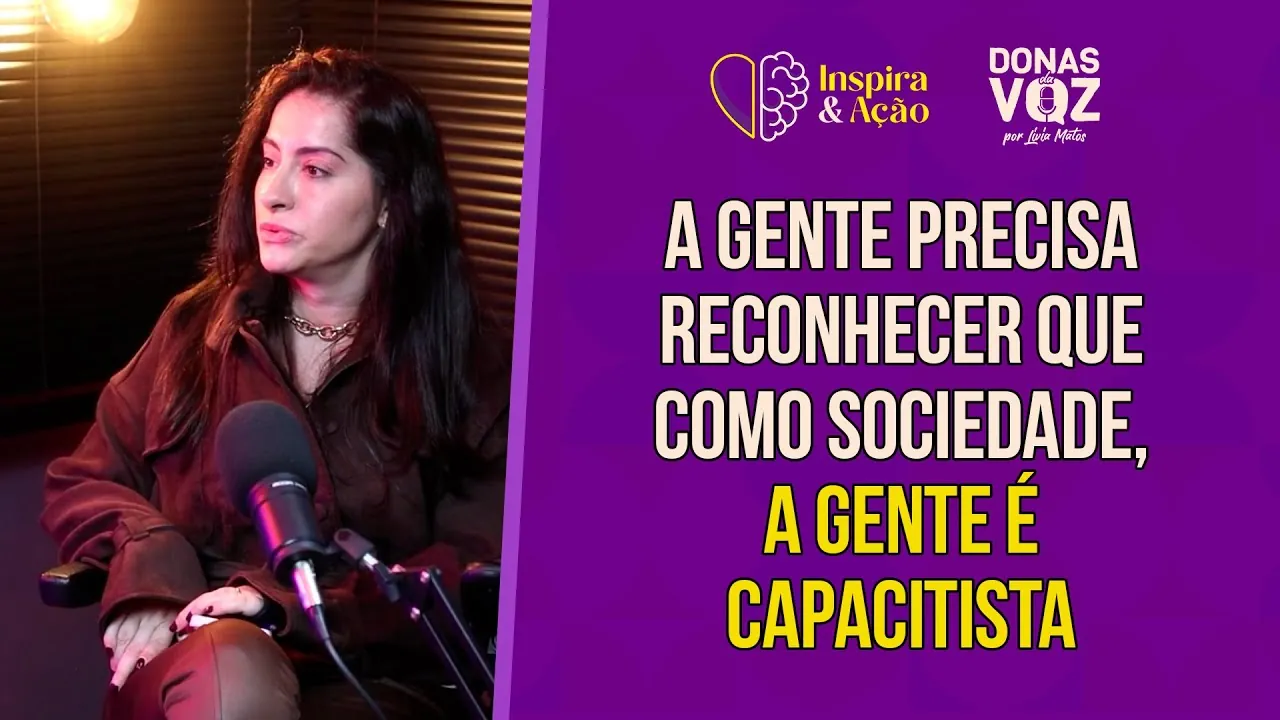
Dr. Daniela Bortman emphasizes that the first step to combating ableism is to recognize that, as a society, we are often ableist. This means we hold prejudices and preconceived notions about the capabilities of people with disabilities. It is fundamental to change this perspective and be open to thinking differently. If we do not question these behaviors, we will continue to perpetuate attitudes that, even with good intentions, end up hindering true inclusion.
Genuine and Effective Help: The Key to Respect
How many times have we seen someone trying to help a person with a disability, only to end up hindering them? Dr. Daniela explains that this happens because help is often offered in the way we think the person needs it, not in the way they truly need it. A clear example is with visually impaired individuals: instead of pushing them into a chair, the ideal approach is to guide their hand to where the seat is, allowing them to maintain autonomy. Respect lies in understanding and meeting the other person's real needs.
Accessibility and the Evolution of Society
It's important to understand that it's okay not to know how to act in all situations, as long as there is a willingness to learn. Dr. Daniela reminds us that, until recently, many people with disabilities did not leave their homes due to a lack of accessibility in all areas. This reality is changing, and our role is fundamental for society to continue evolving towards a more accessible and inclusive environment for everyone. It is a continuous learning process to build a future where everyone feels welcomed and capable.
PUBLICIDADE (GAM) — 1250x250