Lifestyle
Daniela Bortman: Overcoming Adversity, Inclusion, and Workplace Health
Discover how Dr. Daniela Bortman transformed adversity into purpose, inspiring a more inclusive future.
Dr. Daniela Bortman, Brazil's first quadriplegic doctor, shares her journey of overcoming adversity after an accident. Her story highlights the importance of inclusion, mental health, and how prejudice impacts access to healthcare and the job market. An inspiring conversation about resilience, female leadership, and combating ableism.
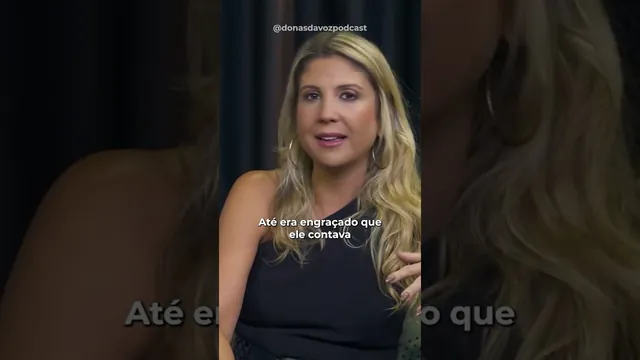
In the Donas da Voz videocast, host Livia Matos welcomes the inspiring Dr. Daniela Bortman, an occupational physician, speaker, consultant, and Brazil's first quadriplegic doctor. Her story is a powerful testament to resilience, empowerment, and the fight for a more inclusive world, covering everything from her passion for medicine to the challenges of ableism and the importance of mental health.
PUBLICIDADE (GAM) — 1250x250
Passion for Medicine and an Abrupt Accident
From a very young age, Daniela dreamed of becoming a doctor, influenced by her parents, both healthcare professionals. She fondly recalls seeing her parents improving people's lives and her own inclination to care for others, even in adolescence. Her calling was clear.
In her third year of medical school, a car accident changed everything. Without a seatbelt in the passenger seat, her vehicle was hit at high speed, resulting in a cervical spine injury that left her quadriplegic. The impact was so severe that Daniela only regained consciousness of what happened 15 days later. Her brain, in some way, erased the immediate memory of the trauma. Her initial recovery was marked by an induced coma and 70 days on a ventilator.

Denial and the Discovery of Ableism
After the accident, Daniela lived in complete denial, believing the situation would be temporary. Even as a medical student, she didn't have a full understanding of diversity or life with a disability. Despair set in when she realized her body no longer responded to commands, leading her to wish for death, feeling there would be no path forward if she didn't regain movement.
With the fundamental support of her family, friends, and a multidisciplinary team, she persisted with every possible therapy, seeking recovery. However, the lack of improvement confronted her with a new reality. Daniela realized that the limitation wasn't within her, but rather in the limited perspectives of a society that saw no possibilities for people with disabilities. She saw herself as prejudiced, internalizing the external gaze. Recognizing this internalized prejudice was painful but also the turning point for deconstructing her own barriers.
The Fight to Return to Medicine and the Importance of Mental Health
Upon attempting to return to university, Daniela was prohibited by the dean, who stated that she “could no longer be a doctor.” This phrase, “it can’t be done,” became a driving force. She had to take legal action and, from then on, work three times harder to prove her capability. With self-awareness and recovered self-esteem, she understood that “it can’t be done” often reflects the other person's inability to see solutions.
Daniela's journey highlights the vital importance of psychological and psychiatric support. Even with access to these professionals, coping with the transformations was extremely difficult. She emphasizes that it's crucial to find a professional who fosters connection, and that therapy shouldn't only be sought in times of suffering, but as a continuous process of self-knowledge and development.
Mental health, she emphasizes, is a global problem with alarming economic impacts. In Brazil, employee illness costs companies R$397 billion annually, and only 23% of employees feel engaged. Daniela points out the need for companies to care not only for the physical environment but also for psychosocial factors at work, such as workload, autonomy, and support.
Women's Challenges and Support Networks
Women, according to Daniela, experience illness more than men for various reasons. In addition to biological differences, social issues such as the double and triple burden, aesthetic pressures, and the disproportionate job loss after maternity (40% for women versus 6% for men) contribute to higher rates of anxiety and depression. Science, historically focused on male bodies, also has a gap in understanding female health.
Amidst these challenges, a support network becomes fundamental. Daniela shares the importance of her husband, who met her after the accident. He helped her regain her self-esteem, seeing her beyond the wheelchair and building a partnership based on respect and shared responsibilities. The common social perception that love in cases of disability is only possible if it pre-existed the trauma, according to Daniela, is a clear example of structural ableism.
Leadership, Inclusion, and the Prejudice That Kills
As a leader in one of the world's largest pharmaceutical companies, Daniela faced the challenge of asserting herself as a woman, young, and with a disability in a professional environment. She emphasizes that having a medical degree facilitated her entry into the job market, but the attitudinal barrier (prejudice) is a constant obstacle for many people with disabilities.
Daniela works as a consultant in Diversity, Equity, and Inclusion (DEI), seeking to create healthier work environments. She criticizes inclusion that is limited to quota fulfillment, advocating that individuals should be hired for their skills and the demands of the role, not their disability. A striking experience was a job interview where, after several stages, she was dismissed under the pretext of lack of accessibility, even for needs she didn't have. This case illustrates how lack of information and prejudice exclude.
Dr. Bortman coined the phrase “Prejudice kills.” She explains that the exclusion generated by prejudice leads to suffering, which, in turn, results in physical illness. As an example, she recounts the difficulty and pain of trying to get a mammogram at a state-of-the-art diagnostic center, where the lack of accessibility made the exam unfeasible, showing how the absence of access can literally cost a life. She also cites cases of Black patients with reduced consultation times and trans individuals being wrongly referred, demonstrating that the attitudinal barrier is a matter of life or death in accessing healthcare.
When evaluating Brazil in terms of accessibility and inclusion, Daniela assigns a score of two, highlighting that while the legislation is excellent (a perfect ten), its practical application is almost nonexistent.
The Donas da Voz Question
At the end of the conversation, asked what she would say to her younger self, Daniela Bortman, with her wisdom and serenity, replied: “Don't take so long to become my own best company.” A powerful message about self-acceptance and self-love, which echoes the essence of her journey and inspires all women to embrace their own stories with strength and purpose.
PUBLICIDADE (GAM) — 1250x250