Lifestyle
Barriers: Urban, Architectural, and Attitudinal
Uncover how hidden prejudices and attitudes pose obstacles just as real as physical ones to the inclusion of people with disabilities.
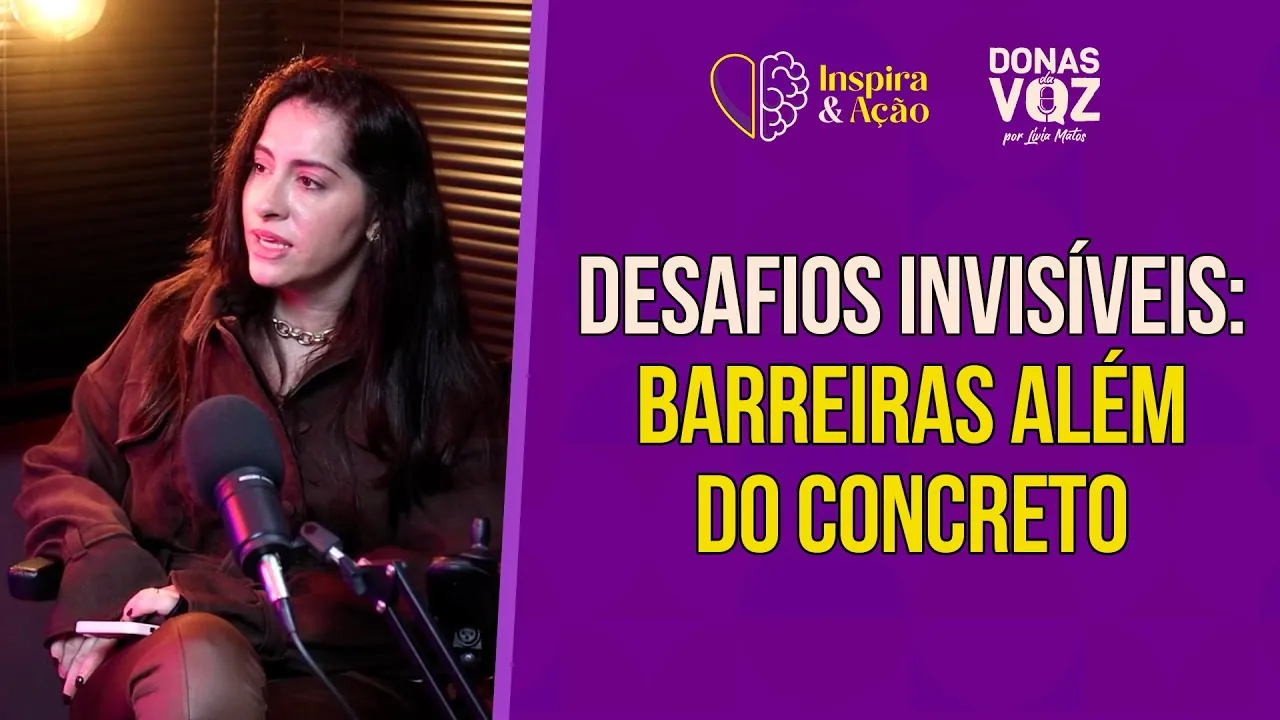
Dr. Daniela Bortman, in an interview on Donas da Voz, reveals the types of barriers faced by people with disabilities. Beyond physical ones, such as ramps and tactile paving, there are attitudinal barriers, which reflect prejudices and a lack of willingness to discuss inclusion. Understanding these challenges is crucial for building a more welcoming society.
In the 'Inspire and Act' segment of Donas da Voz, Dr. Daniela Bortman invites us to reflect on the various types of barriers that people with disabilities face daily. Far beyond physical structures, there's a universe of attitudinal challenges that demand our attention and transformation.
PUBLICIDADE (GAM) — 1250x250
Visible Barriers: Urban and Architectural
Starting with the most obvious, urban and architectural barriers are those that directly impact mobility and access. Think of inadequate tactile paving, the absence of ramps, or the lack of physical accessibility devices in public and private buildings. These are the structures that need to be adapted to ensure everyone's autonomy and safety.
Invisible Barriers: Attitudinal
However, Dr. Daniela Bortman emphasizes that there are even more complex obstacles, often harder to overcome: attitudinal barriers. These manifest in behaviors and thoughts, such as:
- Unwillingness to discuss the topic: The simple act of avoiding the subject or showing disinterest. It's the famous "that doesn't concern me" or "that's not my reality."
- Unconscious prejudices: The subtle, and sometimes unconscious, belief that people with disabilities "don't deserve" or "have less value."
It's crucial to realize that often, upon seeing someone in a wheelchair, the first reaction is to associate them with pity or sympathy, as if disability were something negative or bad. This reductionist and prejudiced view hinders true inclusion and shows how deeply rooted these attitudinal barriers are.
Understanding that disability is not synonymous with weakness or incapacity is the first step to dismantling these attitudinal barriers. We need to change our perspective and recognize the value and capacity of each individual, fostering a truly inclusive and welcoming society for all.
PUBLICIDADE (GAM) — 1250x250