Sports
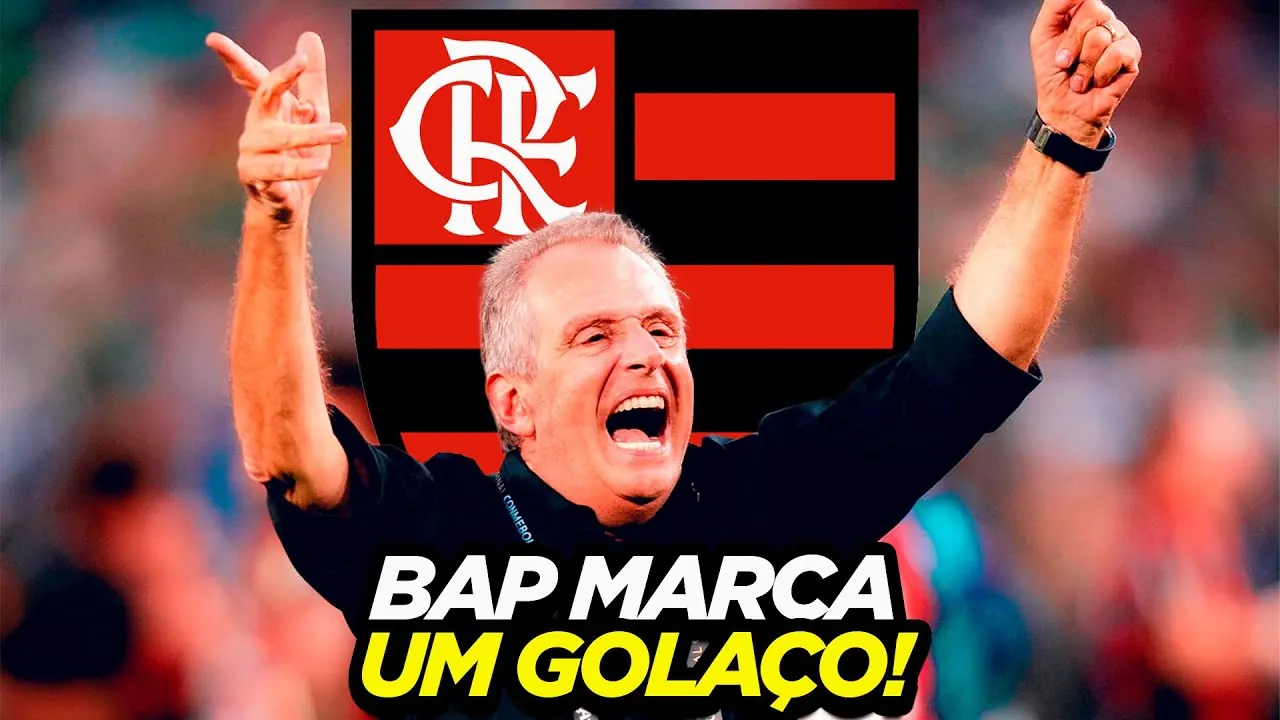
BAP Sets Conditions for Flamengo to Join New League
Club president demands at least 15% of revenues and contests financial losses in broadcast rights distribution.
President BAP told the deliberative council that Flamengo will not compromise on revenue to join a new Brazilian soccer league. The club is seeking at least 15% of the total pool and is challenging financial losses tied to Libra's share distribution.
Flamengo will make no financial concessions to join a new soccer league in Brazil. During a meeting with the club's deliberative council, President BAP presented a projection indicating that the Rubro-Negro requires at least 15% of total league revenues to sustain its current broadcast rights earnings.
In the video above, Bernardo Ramos analyzes the board's stance and argues that the executive acted correctly in shielding the club's financial interests, fulfilling his duty to the deliberative council without agreeing to harmful terms.
PUBLICIDADE (GAM) — 1250x250
Libra's Distribution Structure and Contractual Impasse
Libra's revenue distribution follows a 40-30-30 split: 40% shared equally among all participants, 30% based on athletic performance, and 30% tied to audience metrics. In the equal 40% bracket, Flamengo receives the same payout as clubs like Chapecoense. In the 30% performance share, as the reigning Campeonato Brasileiro champion, the club secures the largest share compared to rivals such as Palmeiras, Vasco, Grêmio, Internacional, and Corinthians.
The primary point of contention lies in the 30% audience share. While former president Landim had signed off on the general 40-30-30 distribution model, President BAP did not sign the specific breakdown of how that audience fraction would be divided, opening the door to a renegotiation to maximize Flamengo's earnings.
The Impact of Remo's Promotion and Potential Legal Dispute
With Remo joining the Campeonato Brasileiro Série A, Libra's revenue share expanded from 9 to 10 clubs. This change reduced the total amount distributed among the block's clubs by R$ 100 million, resulting in an individual loss of R$ 10 million for Flamengo.
Citing clauses that called for adjustments should a new club join the top flight, Flamengo is claiming this amount in negotiations that also include broadcaster Globo. In Bernardo's view, the dispute is likely to end up in sports or civil court to protect the club's revenue.
Record Revenue and League Independence
In its most recent fiscal year, Flamengo reported total revenue between R$ 2.07 billion and R$ 2.08 billion. Three extraordinary factors fueled this historic result: participating in the FIFA Club World Cup, which brought in over R$ 150 million; the sale of Wesley to Roma for €25 million; and the transfer of Gerson to Zenit for €25 million—a player who later moved to Cruzeiro for a fixed fee of €27 million plus €3 million in variables at age 28.
To sustain this earning level without relying strictly on player transfers, the club must secure reliable, recurring revenue streams. Looking at the national landscape, Bernardo opposes Brazilian Football Confederation (CBF) involvement in league operations, advocating instead for an entirely independent league run by club consensus—citing the historical precedent of the 1987 Copa União, founded five years before the British Premier League in 1992.
PUBLICIDADE (GAM) — 1250x250