Sports
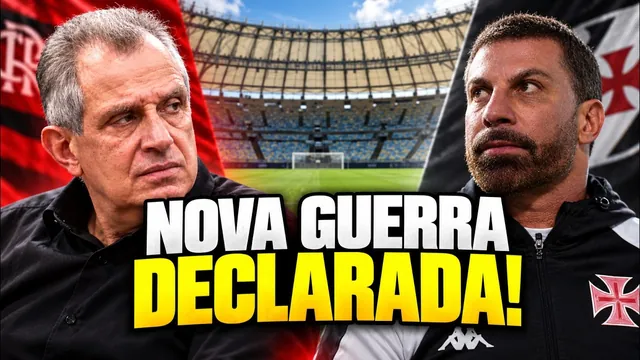
Alex Misrepresents Finances of Flamengo and Vasco
Bernardo Ramos fires back at claims regarding judicial recovery and analyzes pundits' narratives on Flamengo's financial management.
Recent remarks by former player and pundit Alex on SporTV regarding Vasco's financial health and alleged favoritism toward Flamengo have triggered sharp debate. Bernardo Ramos analyzes the realities of Vasco's judicial recovery and the governance models shaping Brazilian soccer.
Recent remarks by former player and SporTV commentator Alex regarding the finances of Vasco da Gama and Flamengo have drawn sharp criticism. During a television broadcast, Alex claimed that the São Januário club was in solid financial shape and suggested that governing bodies routinely favor Flamengo in their rulings.
For analyst Bernardo Ramos, the commentary is misinformed and ignores the accounting realities of Brazilian soccer. Major legal and administrative decisions do not stem from club allegiances among officials, but rather from the objective assessment of corporate governance practices.
PUBLICIDADE (GAM) — 1250x250
Statements on Vasco's judicial recovery
The central counterpoint revolves around Vasco da Gama's ongoing judicial recovery process. Club president Pedrinho publicly stated that the organization required a R$ 150 million loan to meet its immediate financial obligations—a request that was ultimately denied by the courts. For Bernardo, Vasco's management demonstrates clear structural flaws by continuing to sign high-profile players while relying on emergency legal measures.
In this context, Bernardo cited an article by sports finance specialist César Grapiete, who highlighted the risk of judicial recovery being used as a shield for inefficient club administrations. The narrative that the rival club is acting properly and facing unfair persecution disregards the reality of uncontrolled spending and a lack of budgetary backing.

Recurring criticism in the sports media
Bernardo points out that this stance reflects a broader trend among media figures. As examples, he cites Fred Bruno—who was the sole pundit to pick against Flamengo ahead of their match with Mirassol, which ended in a 5–1 victory for the Rubro-Negro at Manoel Campos Maia Stadium—and Alicia Klein, who argued that Flamengo had received a reality check after losing the Club World Cup final on penalties to Paris Saint-Germain, while also downplaying their 2–1 win over Cruzeiro in the Copa Libertadores.
In the analyst's view, a segment of sports commentators remains reluctant to acknowledge the structural work that elevated Flamengo to an elite sporting and financial tier, preferring instead to praise high-risk practices at other clubs.
Financial management and market discipline
The antidote to undisciplined management is strict adherence to a balanced budget. Under the leadership of Luiz Eduardo Batista, Flamengo adheres to a firm policy against imprudent financial operations. A cited example is the negotiations involving forward Gonçalo Plata with Dynamo Moscow, where Flamengo required upfront payment to release the Ecuadorian international. Similarly, the pursuit of Luiz Henrique did not move forward because Zenit demanded €35 million entirely upfront.
Bernardo draws a parallel with the recent policy of fiscal responsibility at Palmeiras, which sold Alan and continues to operate within its budgetary cap. In his view, Flamengo's financial stability required deep sacrifices that began back in 2013—such as returning Vágner Love to Russian football—to launch the restructuring that underpins the club's balance sheet today.
PUBLICIDADE (GAM) — 1250x250