
Running Has No Standard Body: Fernanda Pereira's Journey
From overcoming anxiety to 21 km in Rio, the Corrandelas founder proves every body belongs on the road.
Fernanda Pereira discusses representation, mental health, and completing a half marathon using the run-walk method. The content creator shares how welcoming non-traditional bodies into running builds an empowering community.
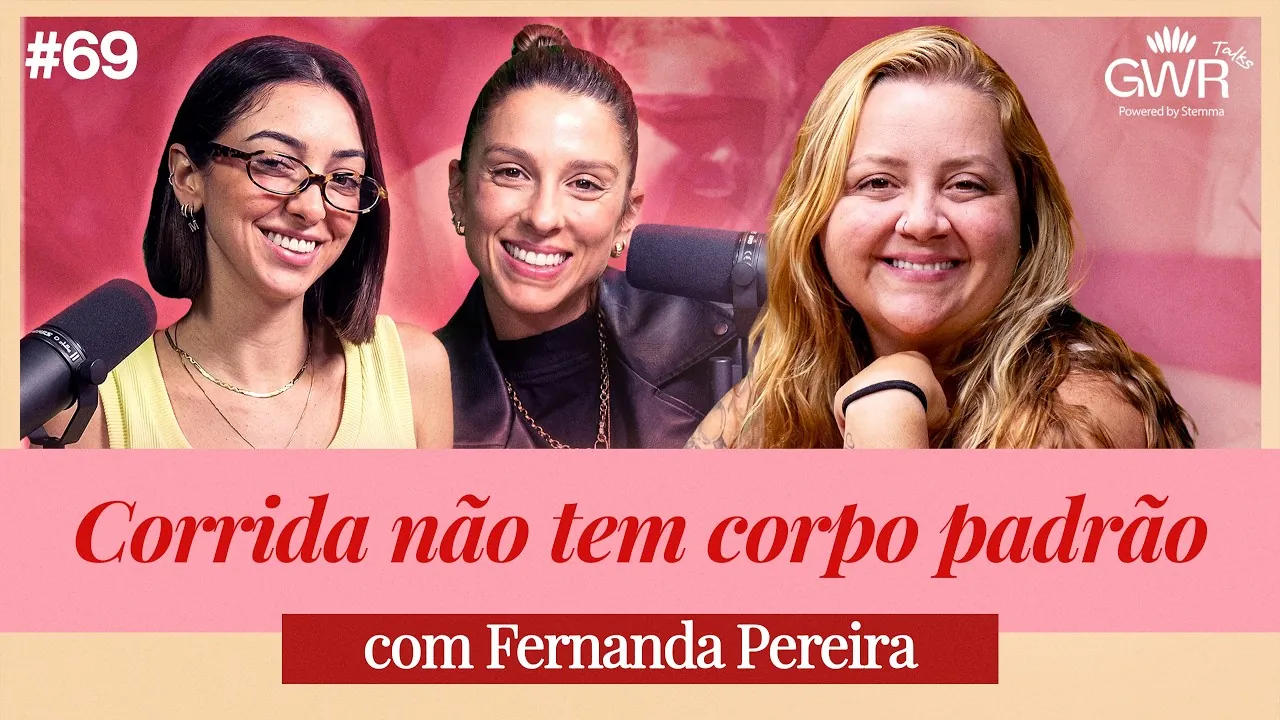
The idea that road running belongs solely to lean bodies and fast paces still discourages many people from the sport. To dismantle this stereotype with warmth and humor, Fernanda Pereira turned her personal journey into widespread inspiration. In an interview on the Girls Who Run podcast, hosted by Mariana Real and Marcella Fanti, the 40-year-old creator from Rio de Janeiro detailed how she transitioned from a sedentary lifestyle to conquering the 21 km Rio Half Marathon, proving that the road is open to everyone.
Sports as medicine for mental health
Until 2022, Fernanda led a completely sedentary life, convinced that athletic pursuits were reserved exclusively for those with innate talent. Her turning point came following severe anxiety episodes, when a medical recommendation directed her toward strength training. Her progress in the gym sparked curiosity about what her body could achieve, encouraging her to try ballet, open-water swimming, and beach tennis before ultimately taking up running in late 2023.
Starting out on the pavement was far from simple: the first 300 meters felt like an insurmountable hurdle. By documenting her honest progress on social media—celebrating her first mile and sharing tough, unfiltered workouts—she quickly connected with an audience that did not see itself represented in mainstream fitness aesthetics and performance benchmarks.
Conquering the 21 km and the run-walk method
To cross the finish line at the Rio de Janeiro Half Marathon, Fernanda built a multidisciplinary support team including a running coach, nutritionist, physical therapist, sports physician, and sports psychologist Vanessa Protásio. Mental conditioning proved vital in dispelling self-doubt and the fear of missing the course cutoff time.
On race day, she adopted a deliberate run-walk strategy: running 4 km followed by a 3-minute walking break—a method she affectionately calls corrandar. Completing the course at an average pace of 10:40 per kilometer within the official cutoff window for early starters, Fernanda emphasizes that her medal holds the exact same worth as that of someone who ran continuously, proving that the experience and joy of the event far outweigh external expectations.
Representation, bias, and taking up space
Graduating with a marketing degree at 39 and working full-time in sports content creation, Fernanda regularly navigates covert prejudice online and at races. She points out that plus-size bodies in athletics are frequently confined to weight-loss narratives or targeted by unwarranted critiques regarding pace and health, whereas lean runners rarely face scrutiny over their motives.
While confronting these barriers, she leverages her platform to open doors for others. The most impactful result of her advocacy has been the creation of Corrandelas (or Correndo Elas), a running meetup in Rio de Janeiro featuring dedicated running, walking, and mixed run-walk groups, completely free of pace pressure and open to mothers running with their children.
Next steps and lifting up other women
With a half marathon under her belt, Fernanda's upcoming goal is not to step up in distance, but rather to return to 5K basics and serve as a pacer at the Maratona do Rio. Her aim is to pay forward the encouragement she received throughout her training cycle and help other women reach their first milestones with confidence, joy, and the freedom to take up space on the road.