
Luciano Taccone's IRONMAN 70.3 São Paulo Gear Setup
The Argentine triathlete details his equipment choices, 150mm short cranks, race nutrition, and shoe selection.
Take an inside look at Luciano Taccone's gear setup for IRONMAN 70.3 São Paulo. The Argentine triathlete explains his wetsuit selection, high-carb fueling strategy, 150mm short cranks, and carbon-plated running shoes.
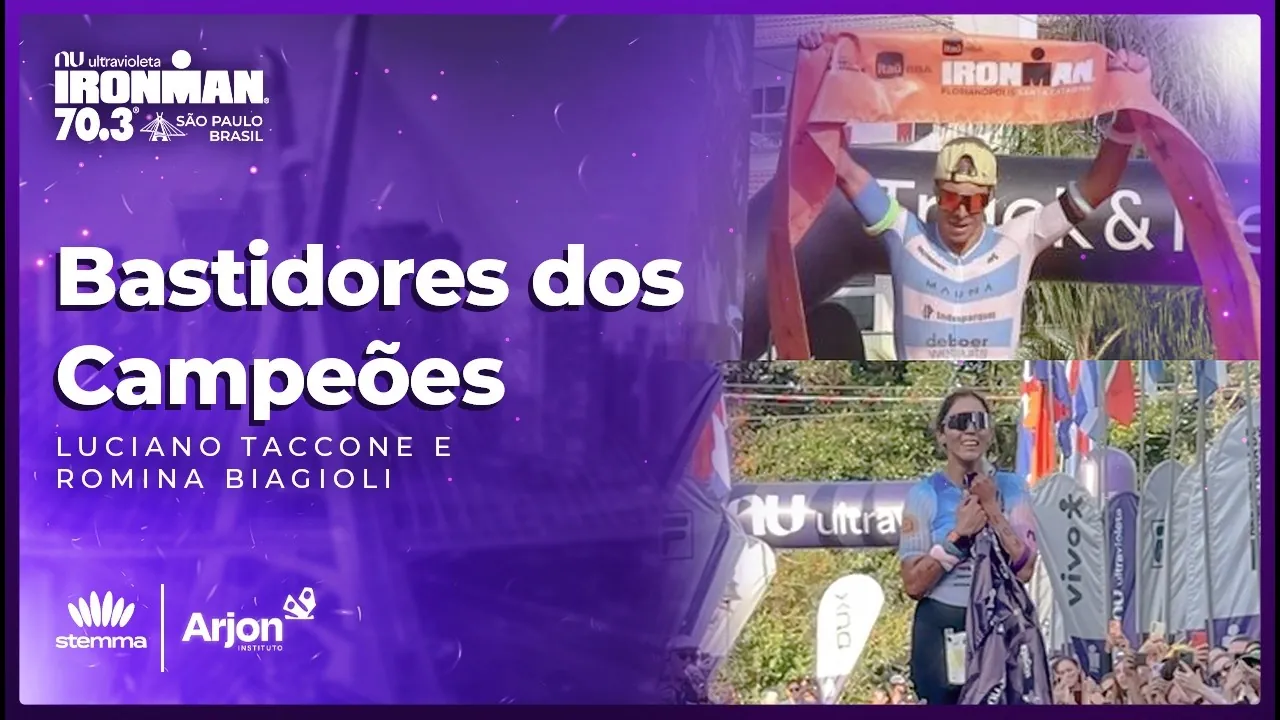
In his final preparations for the Nubank Ultravioleta IRONMAN 70.3 São Paulo, Argentine triathlete Luciano Taccone opened his hotel room doors to break down his gear, apparel, and nutritional strategy for the race. In a candid interview during Stemma Sports' race coverage—which also featured Romina Palacio's preparation in the same episode—Taccone explained the logic behind every component of his racing arsenal.
Swimming with a focus on shoulder mobility
For the opening leg of the race, his wetsuit of choice is the Zoggs Apex Ultra. The athlete emphasized that shoulder and arm flexibility is the most critical factor for his swim, especially as he manages limited mobility in one shoulder. Although the suit features thinner neoprene in the legs and less buoyancy compared to purely float-focused models, the unrestricted stroke rotation pays off for his technique.
Heading into the water, Taccone swims with his race trisuit fully on, leaving only the front zipper open so it does not restrict his breathing, while applying petroleum jelly to his neck to prevent wetsuit collar chafing. The trisuit is an ultra-light piece engineered for hot conditions, featuring aerodynamic sleeve fabric, a full front zipper, and rear-only pockets.
Bike setup, tire pressure, and the 150mm short crank secret
On the bike, his setup is optimized to combine extreme aerodynamics with lightning-fast transitions. His Shimano triathlon cycling shoes are mounted horizontally to the pedals with rubber bands, allowing him to slip into them on the fly without losing precious seconds in T1. For his helmet, he chose an aero model from Specialized, which proved fastest in its class during his track and wind-tunnel testing, despite offering less ventilation than standard road helmets.
The cockpit and bike geometry feature several customized adjustments. Taccone runs a saddle that is longer and wider at the nose, designed to provide full support in his aggressive, forward-leaning aero tuck. For tires, he opted for a 28mm tubeless setup inflated to 75 psi, ideal for the road surface along the São Paulo course.
The most distinctive technical feature on the bike is the crank arm length: 150 mm, significantly shorter than the industry standard. According to Luciano, shorter cranks solve two key issues: with his shorter legs, the reduced crank arm prevents his hip angle from closing down too tightly at the top of the pedal stroke, allowing him to raise his saddle, improve aerodynamics, and eliminate the hip pain and injuries that plagued him in the past.
Dialed hydration and racing by feel without a GPS
For the roughly two-hour bike leg, Taccone carries three bottles on his bike: two loaded with approximately 110 grams of powdered carbohydrates each, and a third bottle with plain water for hydration and mouth rinsing. Gels are carried purely as a safety margin in case of an unforeseen issue with his liquid fueling.
Interestingly, Taccone chooses not to use a GPS computer on his handlebars during the bike leg. The triathlete prefers pacing himself based on race dynamics and the moves of key rivals, such as strong Chilean swimmer Vicente Trewhela and cyclist Martín Ulloa, avoiding fixation on numbers and focusing on tactical pack racing allowed under distance rules.
The run with carbon-plated shoes and race nutrition
For the final half marathon, his shoe of choice is the Fila Racer Carbon 3. Taccone highlighted that the stable platform and responsive carbon plate provide the optimal support needed to maintain an efficient stride despite cumulative fatigue from earlier legs.
His fueling plan for the 21 km includes large gel packets packing 75 grams of carbohydrates each, paired with a caffeinated gel for the final third of the course. He runs in socks and wears compression calf sleeves under his wetsuit from the swim onward, ensuring a fast transition and thermal comfort all the way to the finish line.