
Design Thinking & Field Experience in Marketing Strategy
Richard Batista explains how on-the-ground research, physical presence, and targeted funnels outperform cold automation.
Richard Batista details how applying design thinking enables creative problem-solving across operational and business processes. In discussion with Bruno Gimenes, he highlights identifying untapped commercial demand in Ibitinga, the enduring value of face-to-face interactions over cold automation, and the power of niche segmentation.
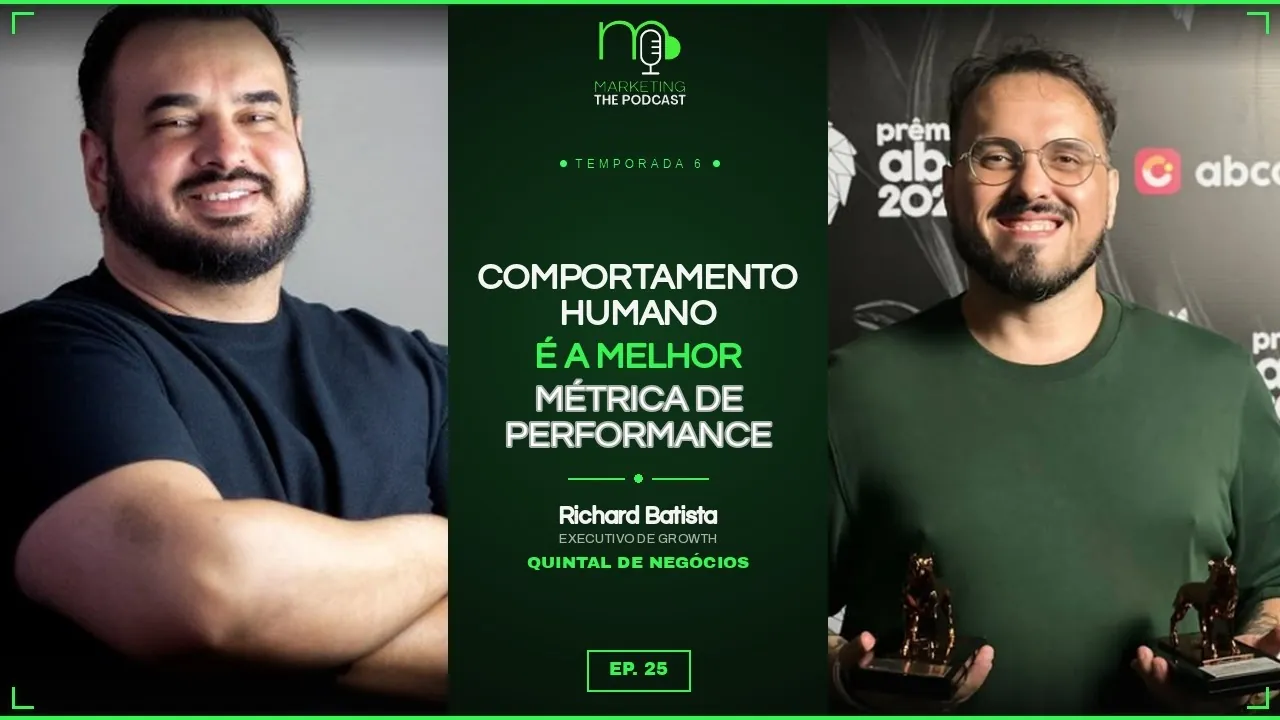
Richard Batista, Head of Performance & GTM at Camesa and founder of Quintal de Negócios, joined Bruno Gimenes on Marketing - The Podcast to discuss applying design thinking to business structures, the critical role of field experience, and the pitfalls of over-automating sales and relationships.
In the video above, the conversation explores how being physically present in commercial hubs and closely observing customer behavior uncovers market demands that digital analytics miss.
The limits of automation in networking and prospecting
The flood of automated messaging bots and filters across professional platforms like LinkedIn and WhatsApp often alienates contacts rather than creating qualified opportunities. In Batista's view, handing initial outreach entirely over to automated tools diminishes perceived value: "If you rely solely on a bot for prospecting and build your business in such a cold way, it will directly reflect in the quality of work you produce."
Building meaningful business relationships depends on mutual accessibility. Batista and Bruno highlight Marcelo Arruda as an example of availability and creating frictionless connections, demonstrating that high-impact leaders prioritize simplicity in direct dialogue.
Design thinking applied to business structure
The concept of design thinking extends far beyond product aesthetics or visual design, functioning as an approach to redesign internal processes, operating models, and management workflows. Batista explains that this discipline allows teams to analyze business from a creative perspective: "It's a creative way to look at business. We look at the business outside conventional, standardized processes."
Applying this methodology to connect internal channels with sales teams enables companies to identify productivity bottlenecks and craft customized solutions. Batista points out that integrating unconventional formats, such as strategically engaging marketplace sellers at events, delivered exponential returns on modest investments.
Field experience and commercial opportunities in Ibitinga
On-the-ground observation of commercial ecosystems is essential for uncovering opportunities invisible to traditional data. While exploring the textile hub of Ibitinga—a São Paulo municipality of 70,000 residents set to host Shopee's largest distribution center in Brazil—the sales team discovered that the local home textile sector had a significant shortage in towels and terry cloth products.
This discovery came directly from traveling to the area and speaking with local shopkeepers and retail buyers. Batista highlights the team's field effort: "What did we identify? Marketing, networking, behavior, and firsthand experience—we had to go there. I drove five or six hours with the team to be there, going in and talking to people all day long." This immersive approach enabled the brand to supply the region's top retailers just four months later.
Targeted segmentation and niche marketing
Attempting to appeal to everyone often dilutes marketing campaign effectiveness. In a consulting case study in the confectionery industry by Quintal de Negócios, revenue jumped 300% after the company shut down broad channels and focused exclusively on consumers seeking sugar-free products, partnering with influencers aligned with that value proposition.
To structure these initiatives, Batista advocates for a streamlined three-stage funnel: "I use three stages: awareness, engagement, and sales." Assertively targeting the ideal customer profile and mastering niche markets prevents wasted ad spend on broad campaigns when targeting local or specific segments.